
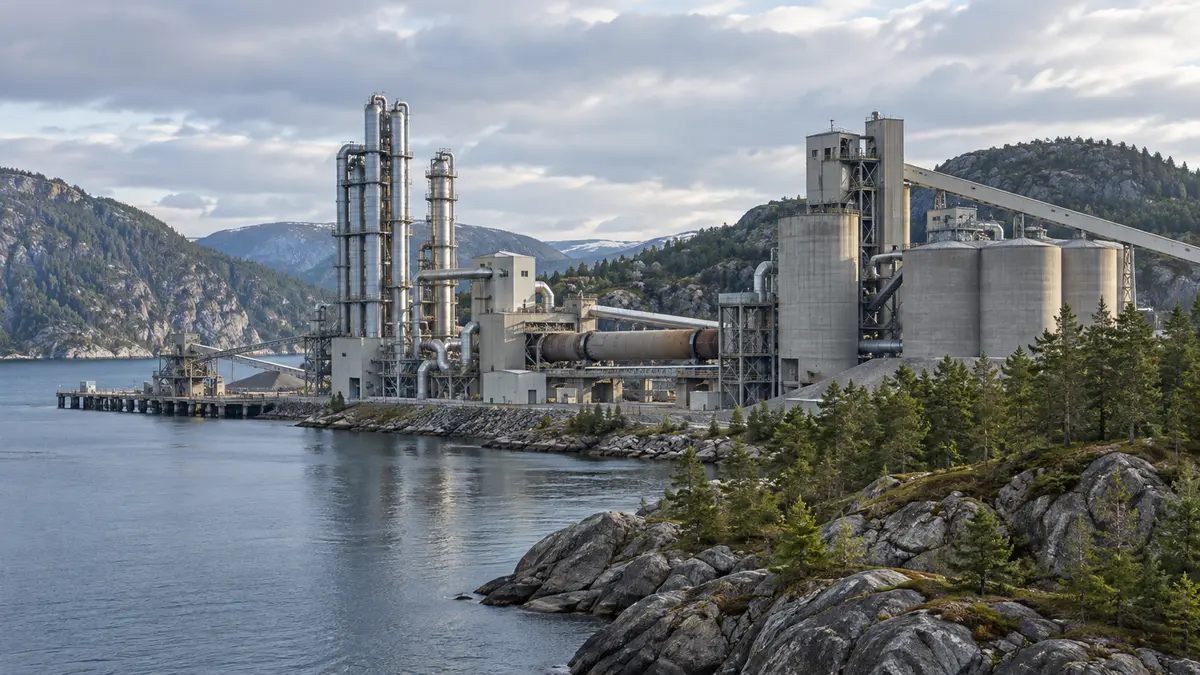
A cement factory in Brevik, southern Norway, is entering a new phase of production with equipment that captures carbon dioxide before it leaves the industrial site. On 18 June 2025, Heidelberg Materials opened its carbon-capture facility as part of Longship, the Norwegian programme connecting industrial emissions with transport and geological storage. The opening brought together a working cement plant, a new capture installation and infrastructure extending far beyond the factory boundary.
The commercial announcement was equally specific. Chief executive Dominik von Achten said that customers had already committed to the carbon-captured cement output planned for 2025. The production line was still being brought up to operating capacity, so the booked volume was smaller than a full year's potential output. The distinction between orders, equipment capacity and actual production runs through the whole project. A new plant can have customers before it has completed a full operating year. Reuters’ account of the opening records the chief executive's assessment.
A cement plant with two kinds of emissions
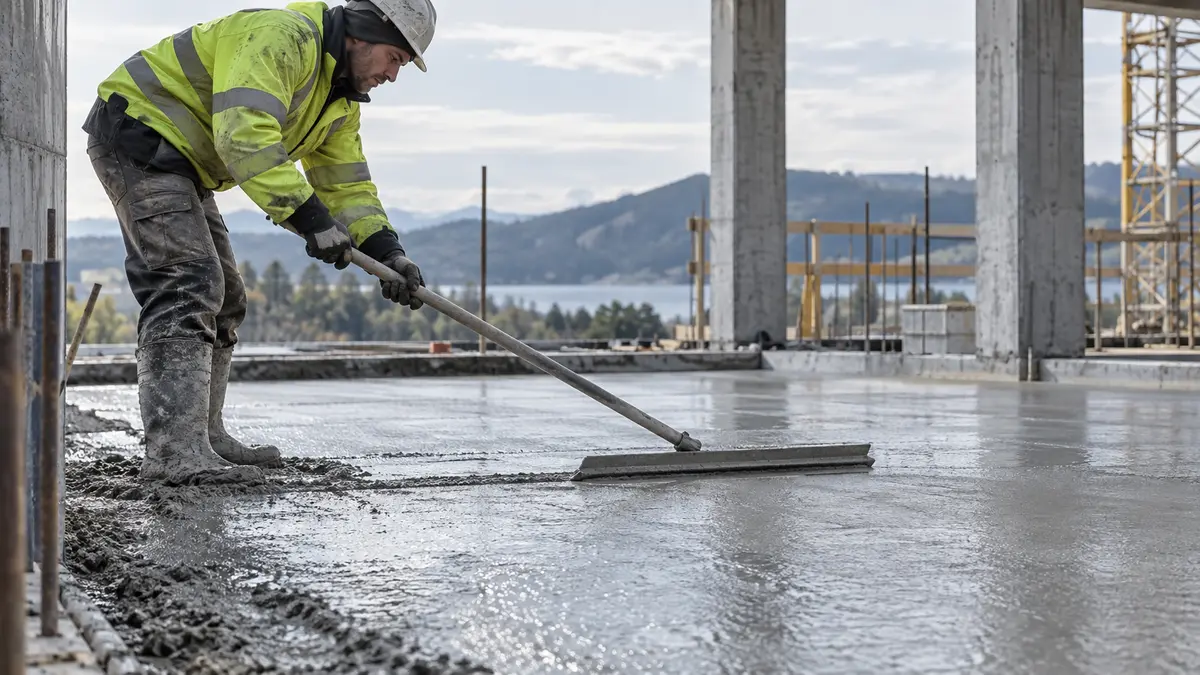
Cement production releases carbon dioxide through both energy consumption and the conversion of limestone into clinker. Kilns need heat, and burning carbon-containing fuel creates emissions. The limestone transformation also releases carbon dioxide as part of the material's chemistry. Changing the source of heat therefore addresses a different part of the process from capturing the gas released during clinker manufacture.
Clinker is the intermediate material used to make cement. Cement then acts as a binder in concrete, which also contains other constituents. These production stages matter when discussing a lower-carbon building material: a result measured at the cement works has to be connected to the cement product and, subsequently, to the concrete used in construction. A factory's gas stream, a tonne of cement and a completed building are separate accounting subjects.

Traditional cement production accounts for around eight per cent of global carbon dioxide emissions. At Brevik, the cement plant has annual production capacity of just over one million tonnes, with approximately half intended for the evoZero offering, according to von Achten at the opening. Cement capacity is expressed in tonnes of building material, while the capture installation's capacity is expressed in tonnes of carbon dioxide. These quantities describe different physical streams through the site. The chief executive also said that the new operation would not produce its full annual potential during the 2025 ramp-up.
Brevik adds a capture process to an existing production operation. The plant continues to make cement while the new installation separates carbon dioxide for onward handling. This approach concerns emissions from an industrial source. It is different from collecting diffuse carbon dioxide from the ambient atmosphere. The project is attached to a gas stream created by manufacturing, and its transport system is designed around the volume captured from that stream.
The physical distinction also explains why a capture installation needs more than a collection vessel. The gas must be captured, prepared and moved to another location. A captured quantity remains within the industrial handling chain until it reaches the permanent storage system. Each transfer introduces a separate operational responsibility, even though all the facilities contribute to the same overall objective.
What was ready at the June opening
Heidelberg Materials describes Brevik as the first industrial-scale carbon-capture and storage installation in the cement sector. The company's 18 June announcement put its intended capture volume at about 400,000 tonnes of carbon dioxide annually, representing roughly half the cement plant's emissions. Those figures describe the installation's planned annual role. They are not a measurement of twelve months of completed capture in 2025.
The project had already crossed several distinct milestones. SLB Capturi announced mechanical completion on 2 December 2024. At that stage, the capture equipment, compression, heat integration, intermediate storage and loading facilities were complete enough to move into testing and commissioning. Construction completion was the starting point for that next stage, rather than evidence that every part of the chain was already operating commercially.

By 12 May 2025, the commissioning team had captured, liquefied and stored its first 1,000 tonnes of carbon dioxide. That quantity was held in tanks beside the cement plant. The dated milestone gave a concrete description of what the new equipment had achieved: gas had passed through the capture and preparation process and reached temporary storage. It did not establish annual throughput or permanent injection.
The June ceremony followed those operating tests. Crown Prince Haakon inaugurated the facility in the presence of Energy Minister Terje Aasland and industry participants. Heidelberg Materials stated that the first transport to the Northern Lights receiving site had started in June. Injection into the subsea reservoir remained scheduled for August. At the date of the opening, temporary storage and onward shipment were achieved stages; the scheduled start of injection was still ahead.
Capture equipment inside an operating factory
The industrial integration extends beyond placing a new tower alongside a kiln. SLB Capturi's construction description identifies a capture system, a compression system and a heat-integration system, followed by intermediate storage and loading facilities. These are different pieces of equipment with different jobs. Their combined purpose is to turn a factory's carbon dioxide stream into a form that the receiving infrastructure can accept.
Compression changes the conditions under which the captured gas can be handled. Heat integration connects the new process with the thermal operation around it. Intermediate tanks provide a place to hold prepared carbon dioxide before a loading operation. These functions are part of the installation itself; the ships and offshore storage facilities belong to the subsequent sections of the chain.

Heidelberg Materials said that the capture installation had been integrated without interrupting ongoing cement production. The June announcement also recorded more than 1.2 million hours of technical work by an on-site team of up to 400 employees and external partners. The figures describe construction and integration effort, rather than the permanent number of people needed to run the finished plant.
The operating workforce has a separate profile. Thirty newly recruited employees underwent training for the capture facility, according to the company. Their work starts where construction teams hand over the equipment: operating the process, responding to its condition and maintaining the connection with the existing cement operation. Bringing equipment into service creates a different routine from assembling it, and the training programme accompanied that transition.
From commissioning tanks to the sea
Longship uses a marine transport connection between the capture site and the receiving terminal. Carbon dioxide from Brevik is liquefied and loaded onto a dedicated carrier for the journey to Øygarden on the Norwegian west coast. At the terminal, it is transferred to tanks before movement through the offshore pipeline. The cement factory and the storage site therefore do not need to sit beside one another.
The transport service is operated within Northern Lights, the joint venture owned by Equinor, Shell and TotalEnergies. Its first vessel, Northern Pioneer, and second vessel, Northern Pathfinder, form the initial shipping pair. Northern Lights' April 2025 account of the previous year described the delivery of the vessels and their arrival in Norway in early 2025. The company expected to start collecting carbon dioxide that summer.

Northern Pioneer had already begun transporting liquefied carbon dioxide from Heidelberg Materials during commissioning when Northern Lights published its 17 June update. Northern Pathfinder was participating in the Longship launch programme and preparing for its own commissioning. These descriptions identify the vessels' different positions in the start-up sequence, rather than treating every ship as having an identical operating history.
For Northern Pioneer, the November 2024 delivery announcement listed a cargo volume of 7,500 cubic metres, length of 130 metres and width of 21 metres. It specified transport conditions reaching a maximum gauge pressure of 19 bar and a minimum temperature of minus 35 degrees Celsius. Cargo volume and cargo mass are different measurements: the volume figure should not be substituted for a tonnage figure without the relevant cargo conditions and density.
A reservoir is a separate industrial system
At Øygarden, temporary storage supports the handover between a ship's delivery and the offshore injection system. Tanks on land hold the carbon dioxide before it travels through the pipeline to the injection wells. The receiving terminal is therefore a transfer and handling site. The permanent storage destination is a geological reservoir beneath the seabed, rather than those tanks.
The Norwegian Ministry of Energy named Aurora as the reservoir used by Northern Lights. Its June statements described the storage formation as approximately 2,600 metres beneath the seabed. That depth relates to the storage destination; it is not the depth of the receiving terminal or a description of a tank. The pipeline, injection wells and reservoir collectively form the offshore end of the project.
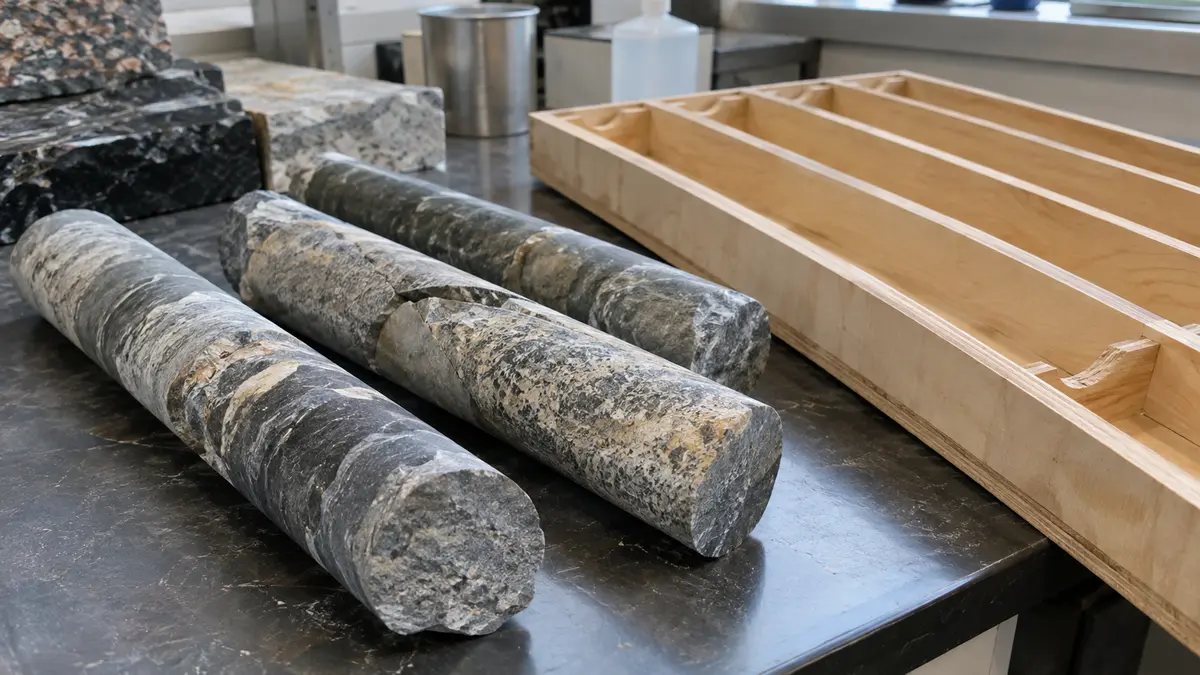
Monitoring is another part of the service. On 18 March 2025, Northern Lights announced an agreement with the independent research foundation NORSAR to monitor Aurora. The arrangement includes a permanent monitoring station near Bergen to detect and analyse seismic activity associated with carbon dioxide injection. The announced work concerns the behaviour of the storage system, separate from measurements taken at the cement factory.
Northern Lights managing director Tim Heijn described continuous observation of injection and seismic activity as support for reliable operation and long-term storage. NORSAR chief executive Anne Strømmen Lycke connected monitoring with confidence among authorities and the public. Those statements set out the organisations' reasons for the agreement. They do not replace operating measurements or establish that future injection volumes have already been stored.
The transport and storage expansion
The first Northern Lights phase provides annual transport and storage capacity of 1.5 million tonnes of carbon dioxide. That is a system capacity shared by participating industrial sources, not a capture target for Brevik alone. The cement installation's planned 400,000 tonnes per year belongs to the capture side; the larger Northern Lights figure belongs to the receiving and storage service.
On 17 June, the Ministry of Energy approved the development plan for a second phase increasing capacity to at least five million tonnes annually. The expansion covers an additional jetty, more storage tanks and greater pumping capacity at Øygarden. Offshore, the planned number of injection wells rises from two to four. Approval of that development plan is different from completion of the new capacity.

The project owners had made their investment decision in March 2025. The ministry's June statement described an expansion investment of NOK 7.5 billion and European Union funding of €131 million. It said that the remaining financing would come from the company without Norwegian state financial support for that expansion. These arrangements apply to Phase 2 and should be distinguished from the support for Longship's initial facilities.
The same development statement identified an agreement to receive up to 0.9 million tonnes annually from Stockholm Exergi's planned bioenergy carbon-capture operation. Northern Lights also had Phase 1 agreements with Yara and Ørsted. The customer list places Brevik within a wider transport and storage network. It does not mean that every contracted customer was already delivering its maximum volume on the opening date.
Public funding and project boundaries
Longship includes the Brevik capture project, transport and storage infrastructure, and a planned capture installation at Hafslund Celsio's waste-to-energy plant in Oslo. The Ministry of Energy's 17 June account put government grants for construction and operation at approximately NOK 22 billion. It put the total estimated project cost, including ten years of operation, at around NOK 34 billion. The time period and included facilities are essential parts of those amounts.
The publicly supported initial chain and the later commercial storage expansion are separate financial packages. A Longship total cannot be treated as the construction price of the Brevik installation alone. It also cannot be combined with the Phase 2 amount and described as one factory's budget without checking for scope and overlap. Each number follows a different boundary around equipment, operating years and participating organisations.

At the opening, von Achten credited the Norwegian government's support with reducing project risk. Aasland said that difficult industrial sectors would need capture and storage within their emissions-reduction measures. Both connected wider adoption with a viable commercial model. Their statements describe the business and policy expectations surrounding the new chain; the opening itself did not supply a market-wide cost comparison with every alternative industrial process.
The announced Oslo capture installation remained a future component. The ministry listed its planned annual capture capacity at 350,000 tonnes and expected start in 2029. Its inclusion in Longship's programme does not turn that future quantity into a current flow through Northern Lights. The project's dated government description separates the operating launch from subsequent development.
What the cement buyer is purchasing
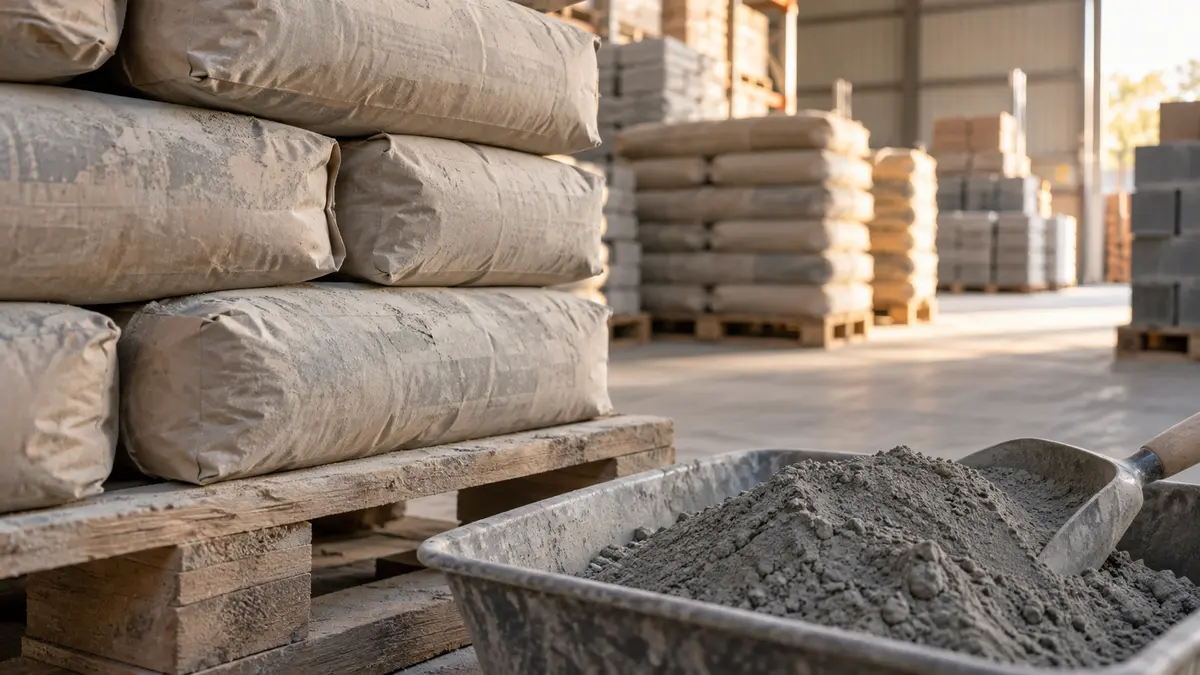
Heidelberg Materials markets the resulting cement under the evoZero name. Its chief executive described a premium-priced product for construction customers seeking a lower carbon footprint. The factory's capture system handles approximately half of plant emissions at its planned annual level, while the company's product allocation supports the offering marketed as enabling net-zero concrete. A product claim and a whole-plant capture share are therefore different statements.
A purchaser needs to connect the supplied product with its documented accounting method and the construction use for which it is bought. A name on a cement order is not, by itself, a measured emissions result for an entire building. Likewise, the plant's annual capture capacity is not the quantity allocated to a particular delivery. The product, the capture operation and the completed construction project have separate quantities and boundaries.
The records available at the opening distinguish several stages that can be followed without conflating them:
- Capture equipment completed and placed into commissioning.
- Carbon dioxide captured, liquefied and held at the factory.
- Shipments delivered to the receiving terminal during start-up.
- Injection scheduled for the subsea reservoir.
- Carbon-captured cement ordered by construction customers.
- Additional storage infrastructure approved for future expansion.
Brevik's June opening joins these stages within one industrial programme. Cement manufacture continues at the source, dedicated vessels connect the factories with Øygarden, and the reservoir sits at the end of the storage chain. The Northern Lights shipping update identifies the initial vessels and their commissioning status. The next operating records will concern sustained capture, completed injection and delivered product volumes, rather than the ceremony or the installation's nameplate figures.



















Leave a comment