
A planned Canadian production chain
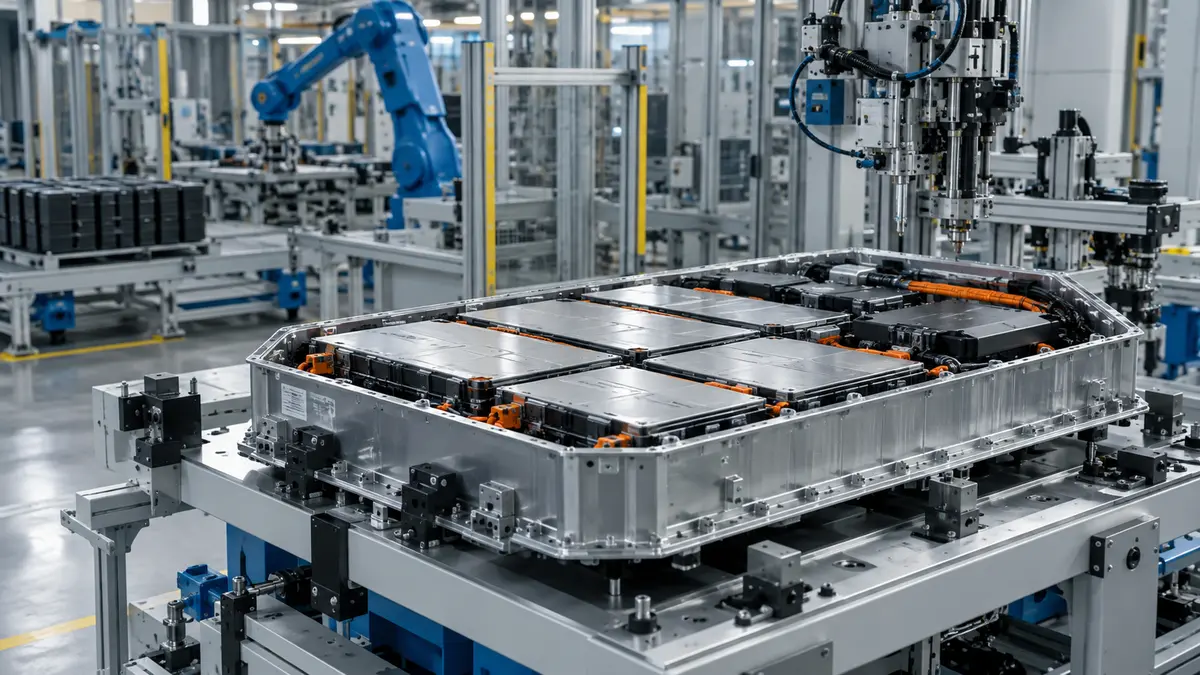
Honda and its partners announced a Canadian electric-vehicle supply chain on Apr 25, 2024, with investment of approximately C$15 billion, equivalent to about US$11 billion. Two proposed plants in Alliston, Ontario, would assemble vehicles and manufacture batteries. Their planned annual capacities were 240,000 vehicles and 36 GWh respectively, with vehicle production expected in 2028. POSCO Future M and Asahi Kasei were the partners for separate cathode-material, precursor and separator projects. Honda was still evaluating investment requirements and negotiating partnerships, expecting to finish within the next six months.
Honda’s existing Canadian operations had produced more than 10 million vehicles since production began in Alliston in November 1986. The Civic and CR-V were built there. The company employed approximately 4,200 manufacturing associates and expected at least 1,000 additional positions for the proposed vehicle and battery factories. Prior Canadian investments exceeded C$6.5 billion; annual purchases from Canadian suppliers exceeded C$3 billion.
Cathode materials and procurement discussions
Honda and POSCO Future M signed a basic agreement on Apr 25, 2024, to collaborate on automotive battery cathode materials in Canada. Their discussions about a broader partnership had begun in April 2023. The companies intended to negotiate a joint-venture agreement before the end of 2024. The announced stage was an agreement to pursue collaboration, rather than the opening of a manufacturing facility.
The proposed venture would supply cathode materials for batteries used in Honda vehicles produced mainly for the North American market. Its work would combine POSCO Future M’s materials technologies with Honda’s electrification expertise. Both companies linked the arrangement to securing supplies of high-performance batteries and executing their electrification strategies, anticipating medium- and long-term growth in North American electrification.
The separator partnership
Honda reached a separate basic agreement with Asahi Kasei on Apr 25, 2024. The partners planned detailed discussions toward establishing a Canadian joint venture before the end of that year. The proposed company would produce separators for batteries used in Honda’s North American electric vehicles and for batteries supplied to other vehicle manufacturers.
A separator is a porous membrane between a battery’s positive and negative electrode materials. It prevents their direct contact while allowing lithium ions to pass through. Asahi Kasei’s Hipore separator business had more than 40 years of development history, according to senior executive Hiroyoshi Matsuyama. He identified energy storage as one of Asahi Kasei’s ten growth businesses. Honda managing executive Manabu Ozawa identified separators as materials contributing to battery performance and durability. Ozawa also reiterated Honda’s target for battery-electric and fuel-cell vehicles to represent all global vehicle sales by 2040.

A signed shareholder agreement
On Nov 1, 2024, Honda and Asahi Kasei signed a shareholders’ agreement to turn E-Materials Canada Corporation into a joint venture. E-Materials was wholly owned through an Asahi Kasei subsidiary. Honda Canada would obtain 25% by subscribing to newly issued shares, leaving the Asahi Kasei side with 75%. The tentative name was Asahi Kasei Honda Battery Separator Corporation, based in Port Colborne, Ontario.
Honda’s proposed commitment of approximately C$417 million, or US$300 million, combined the share subscription and other investment. The proposed company capital was a separate C$240 million. The partners planned to establish the venture and begin its operations in early 2025, subject to regulatory permissions and approvals.
The facility plan combined base-film manufacturing and coating for Hipore separators. Its investment estimate was ¥180 billion, using an assumed exchange rate of ¥145 per US dollar. Planned capacity was approximately 700 million square metres of coated film annually, with commercial startup scheduled in 2027. The company-establishment schedule and factory-production schedule described different milestones.
Groundbreaking and the local workforce
Asahi Kasei held a groundbreaking ceremony at Port Colborne on Nov 14, 2024, four days before publishing its announcement. Government officials and executives from both partners attended. The first phase was expected to create more than 300 full-time jobs. Commercial production remained a future milestone, conditional on the necessary permits and approvals.
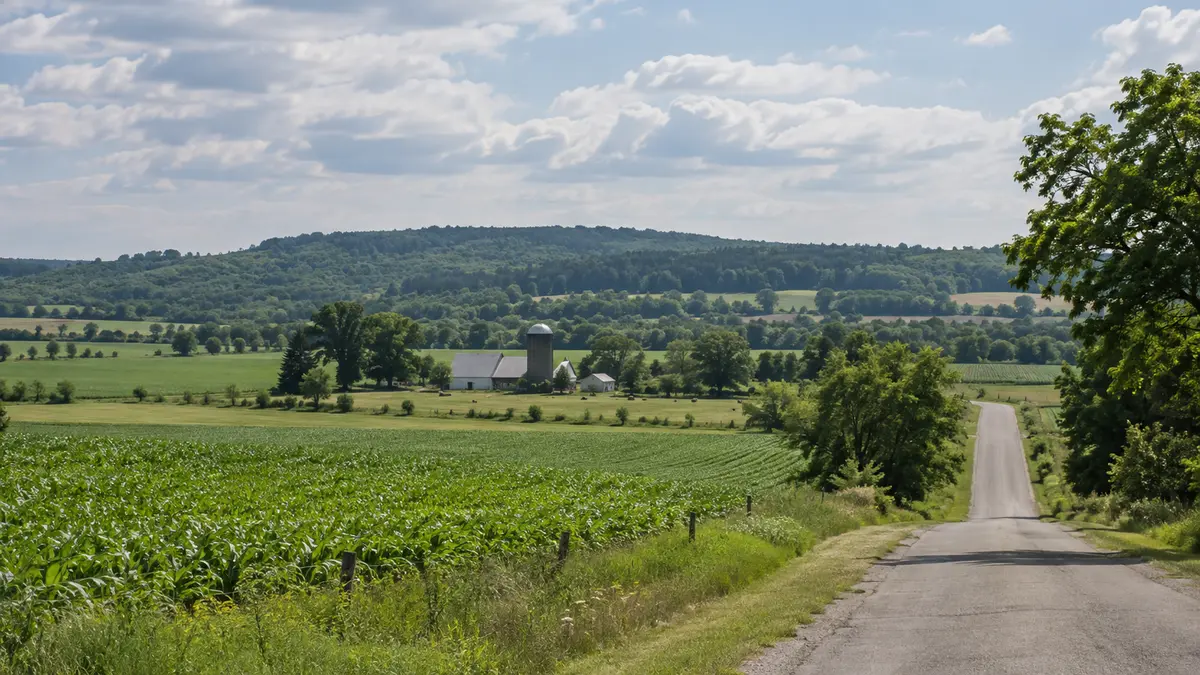
Local hiring had already begun, with more than five employees supporting the startup phase. In September, the company held a community open house at the Vale Health & Wellness Centre. Residents could learn about the project and prospective employment opportunities. Provincial contractors were carrying out earthworks, while structural development and utility connections were expected in the following construction phases.
Asahi Kasei President and Representative Director Koshiro Kudo described Port Colborne as a planned centre of excellence for North American separator demand. The project was intended to become Canada’s first large-scale wet-process separator facility.
Battery research with GS Yuasa
Honda and GS Yuasa International signed a joint-venture agreement on May 11, 2023, after announcing preliminary collaboration that January. Their proposed research company would develop high-capacity, high-output lithium-ion batteries, mainly for electric vehicles, together with battery production methods. Its objectives also included raw-material supply chains and an efficient manufacturing system.
The planned headquarters of Honda·GS Yuasa EV Battery R&D Co., Ltd. was in Kyoto, Japan. Honda and GS Yuasa would each contribute 50%. Capital at establishment was ¥2 billion, alongside a separate ¥2 billion capital reserve. Koichi Yamamoto, from Honda, was designated president; Masaaki Hosokawa, from GS Yuasa, was designated vice president. Establishment and the start of operations were planned before the end of 2023, subject to approvals.

Koichi Yamamoto linked the venture to the two companies’ shared carbon-neutrality objective and expected it to draw on their respective strengths in the battery market. Honda’s May 2024 strategy included GS Yuasa battery co-development for Canadian production.
The research venture begins operations
Honda completed the establishment procedures for the GS Yuasa research venture, which began operating on Aug 1, 2023. The venture became an affiliate accounted for under the equity method. Honda did not anticipate a material effect on its consolidated results for the fiscal year ending Mar 31, 2024.
Ohio’s earlier production preparations
Honda outlined changes to its manufacturing network in the United States in March 2023. Marysville would consolidate its two vehicle assembly lines, creating space for electric-vehicle infrastructure while retaining production on one line. Preparation was expected to begin as early as January 2024, with staff training starting in 2023. Accord production would move to Indiana in 2025. Honda said associates would retain positions during the transition.
Anna Engine Plant would transfer two sets of engine-component operations to Alabama, freeing space for battery cases. The cases would combine with modules from Honda’s battery venture with LG Energy Solution. In Georgia, a supplier would install, own and operate an e-axle line in unused transmission-production space. An e-axle combines an electric motor, gearing and power electronics.

The partners had broken ground on their battery facility near Jeffersonville, Ohio. Their commitment was US$3.5 billion, with total investment projected to reach US$4.4 billion. The plant’s planned annual capacity was approximately 40 GWh. These American investments were separate from the Canadian proposal announced the following year.
Production methods proposed in 2024
Honda’s May 16, 2024 strategy briefing connected the Canadian plan to new battery manufacturing methods. Anna’s proposed battery-case line would use 6,000-tonne-class high-pressure die-casting machines. Honda expected the number of case and associated parts to fall from more than 60 to five. Friction stir welding would join components. A machine installed at Honda’s production-technology research facility in Tochigi was being evaluated for mass production.
For battery-pack assembly, Honda planned a Flex Cell Production System combining modular parts with work cells that brought equipment, fixtures and staff together for each process. Digital-twin technology would reproduce production-line conditions to help manage parts supply, output and speed. Honda intended to extend these methods beyond battery packs.
The company targeted a reduction of more than 20% in North American battery procurement costs by 2030 compared with then-current costs. Its proposed Canadian dedicated EV plant had a separate target: approximately 35% lower overall production costs than conventional mixed-flow lines. Both percentages described company objectives, rather than measured savings from an operating Canadian factory.

Installed equipment and revised assembly areas
By Feb 3, 2025, Anna had installed six 6,000-ton high-pressure die-casting machines for battery-case parts. Each case would consist of two halves, subsequently welded together. One half was common to two case sizes, supporting midsize and larger vehicles. Honda planned to use friction stir welding to join the halves and attach a water jacket. Its inspection programme included multi-camera photogrammetry after casting and before dispatch.
Marysville had consolidated its production lines and created areas for pack assembly and installation. Pack assembly would combine LG venture modules with Anna’s cases. Petrol and hybrid vehicles would pass through the dedicated EV battery-installation area without stopping. The hybrid battery assembly area had also been moved closer to installation and expanded.
East Liberty had built a new paint department and a separate vehicle-quality building. Strengthened carriers and assembly infrastructure were being prepared for heavier vehicles. A battery-pack mezzanine would let EVs leave the main line for installation and then rejoin it. These changes supported Honda’s stated intention to make petrol, hybrid and battery-electric vehicles within a flexible manufacturing system.
Proposed government support
The Canadian government proposed investment-tax-credit support for the supply chain on Apr 25, 2024. Budget 2024 proposed a 10% EV Supply Chain investment tax credit covering investment across at least three segments. It would complement a 30% Clean Technology Manufacturing investment tax credit. The eligible segments were:
- Electric-vehicle assembly;
- EV battery production;
- Cathode active material production.

Federal support for eligible Honda investments was estimated in the range of C$2.5 billion through the proposed credits. Ontario separately offered support of up to C$2.5 billion through direct and indirect incentives. These figures described anticipated support mechanisms, rather than confirmation that the entire amounts had been paid. The credits and provincial incentives also had different forms; they were separate from Honda’s investment ceiling.
The governments had previously made matching C$131.6 million investments to help retool Honda’s Alliston operations for a new generation of hybrids. That earlier support concerned existing manufacturing operations. It was distinct from the new EV supply-chain proposal and its planned factories.
A postponement in May 2025
On May 13, 2025, Honda postponed the Canadian EV supply-chain plan by approximately two years, citing slower EV demand. A specific resumption date had not been finalized. Honda intended to announce that timing once determined, while monitoring demand. The filing did not confirm a replacement opening date for the proposed plants.
A revised investment and production programme
Honda reduced its planned electrification resource investment from ¥10 trillion to ¥7 trillion at its May 20, 2025 briefing, covering the period through the fiscal year ending Mar 31, 2031. The company linked the ¥3 trillion reduction to postponing the Canadian supply-chain project and changing the timing of dedicated EV factories. This was a wider corporate investment programme, distinct from the Canadian project’s C$15 billion estimate.

Honda planned mixed-model lines capable of producing electric and hybrid vehicles during the early adoption period. It would adjust production to demand and sales strategies, use existing assets and allocate electrified components, particularly batteries, across its manufacturing network. The company also described a system for transferring vehicle models between facilities as demand changed.
Honda’s supply chains followed its longstanding policy of making products close to customers. The company intended to maintain local production while strengthening resilience to unexpected market changes.
Indefinite suspension in 2026
On May 14, 2026, Honda announced an indefinite suspension of the Canadian EV supply-chain plan, following its original Apr 25, 2024 announcement and May 13, 2025 postponement. Indefinite suspension left the timetable unresolved; Honda did not provide a new resumption or commercial-production date.
Hybrid capacity and battery procurement
Honda’s May 14, 2026 business briefing set out changes to North American manufacturing alongside the Canadian suspension. The company would reallocate excess capacity at its Ohio vehicle plants to petrol and hybrid models. It also intended to make every North American automobile plant capable of producing hybrids. Those announcements described future allocation and capability plans, rather than confirmation that every site had completed conversion.
Honda and LG Energy Solution would convert part of the EV battery lines at L-H Battery Company to hybrid battery production. Honda also planned to increase local content in motor and inverter assemblies and components to more than four times the current level. Its procurement policy would use external resources and the L-H facilities instead of pursuing complete battery sourcing within Honda itself.
For the three years through the fiscal year ending Mar 31, 2029, Honda planned total resource investment of approximately ¥6.2 trillion. The programme comprised ¥0.8 trillion for EVs, ¥1 trillion for software technologies and ¥4.4 trillion for petrol and hybrid vehicles. Honda would redirect resources previously allocated to EVs toward hybrids and assess subsequent EV investments against demand trends.



















Leave a comment