
A larger factory planned for San Antonio
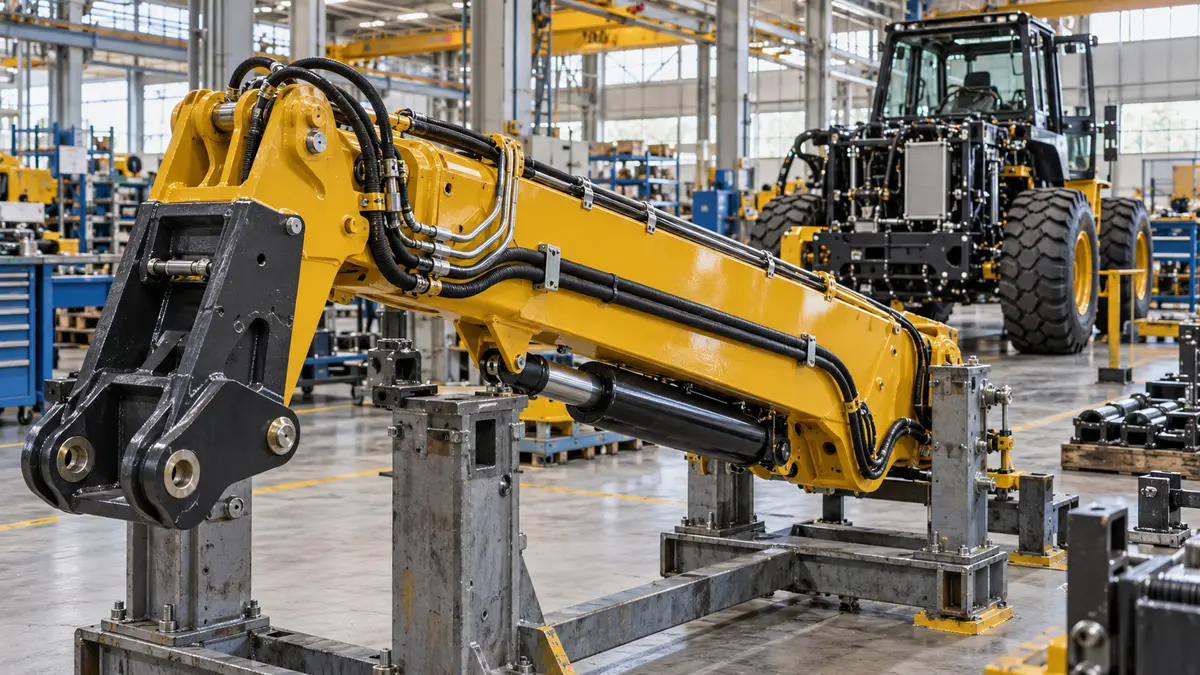
JCB increased the planned size of its San Antonio factory to one million square feet in April 2025. The $500 million project was scheduled to begin production in 2026. Chief executive Graeme Macdonald expected newly announced tariffs to affect the business significantly in the short term and said the Texas factory would help mitigate their medium-term impact. The company described a doubling from a 500,000-square-foot plan. The machinery business supplied more than 300 products to customers in 150 countries. An estimated 15,000 employees worked across its network, which included 21 other manufacturing facilities; its Shanghai-area factory employed more than 150 people. The United Kingdom and India supplied telescopic handlers and aerial work platforms ahead of the Texas opening. A 2024 planning presentation specified 1,580 jobs with an average wage of $54,889. Those were project assumptions for the future operation.
The North American expansion began with an October 2023 announcement of a second factory in the region. JCB proposed a 720,000-square-foot building on 400 acres in San Antonio, with construction expected to begin early in 2024. The initial investment exceeded $265 million, and the employment plan covered more than 1,500 jobs over five years. The products to be made there were still to be announced. JCB already manufactured in Savannah, Georgia, where its first North American plant opened in 2001. That factory produced 18 models of side-door-entry skid-steer and compact track loaders. The company’s North American headquarters was also in Savannah. Macdonald identified San Antonio’s established skills base, central location, highway links and access to ports as advantages. Rail services also linked the area with the United States and Mexico. JCB’s worldwide network then comprised 22 factories, including 11 in Britain and additional plants in India, Brazil and China. The Texas site would primarily supply North American customers.
Construction and the local investment framework
JCB broke ground on the San Antonio project on Jun 4, 2024. Alice Bamford, daughter of chairman Anthony Bamford, turned the first shovelful of earth at the ceremony. The company’s announcement described a $500 million investment, a 720,000-square-foot factory and a 400-acre site. Loadall telescopic handlers and aerial access equipment were the planned products, with production scheduled for 2026 and room for additional product lines later. JCB expected 1,500 jobs over five years. At that stage, the proposed factory would be its second largest, behind the Rocester headquarters complex in Staffordshire, England. North America president and chief executive Richard Fox-Marrs identified Loadall as JCB’s best-selling product in the region and described North America as the largest aerial-access equipment market. He linked the Texas location to local demand, suppliers and labor availability. JCB’s North American division also maintained regional offices in Dallas, Texas; Santa Monica, California; and Miami, Florida.
State, city and county authorities offered a broader financial framework for locating the plant on San Antonio’s South Side. In March 2024, local officials described combined incentive packages worth almost $32 million. The associated project assumptions included at least $265.7 million in investment and 1,580 full-time jobs by the end of 2028. San Antonio’s proposed package was valued at $13.74 million, while Bexar County was considering approximately $12 million. The state had offered a $5.7 million Texas Enterprise Fund grant. The city proposal included a ten-year, 90% tax abatement, development grants and fee waivers. Its conditions allowed the city to recapture funds and waived fees if investment, employment or other agreement requirements were missed. Bexar County commissioners advanced their proposed agreement during March. The company’s incentive application identified expansion in Savannah as an alternative location.

Road access, utilities and the production buildings
Bexar County commissioners approved a $5 million infrastructure grant in January 2025. The award covered the Kelly Parkway Extension project and a water-main extension along Applewhite Road. The county agreement allowed funding up to that amount, and commissioners approved the maximum. The road extension would connect State Highway 16 with Applewhite Road along the alignment of South Zarzamora Street and Walsh Road. San Antonio’s plans for Kelly Parkway envisioned a major thoroughfare serving heavy manufacturing and truck traffic in the southwest of the city. The corridor had appeared in a 1997 mobility study linking Loop 410 with Kelly Crossroads. JCB’s factory was under construction when the grant was approved. A company statement then retained a mid-2026 initial-production target and identified telescopic handlers and mobile elevating work platforms as the intended output. By January 2025, the city had approved its $13.74 million package and the county had provided incentives valued at roughly $12 million. The infrastructure grant formed part of those local arrangements.
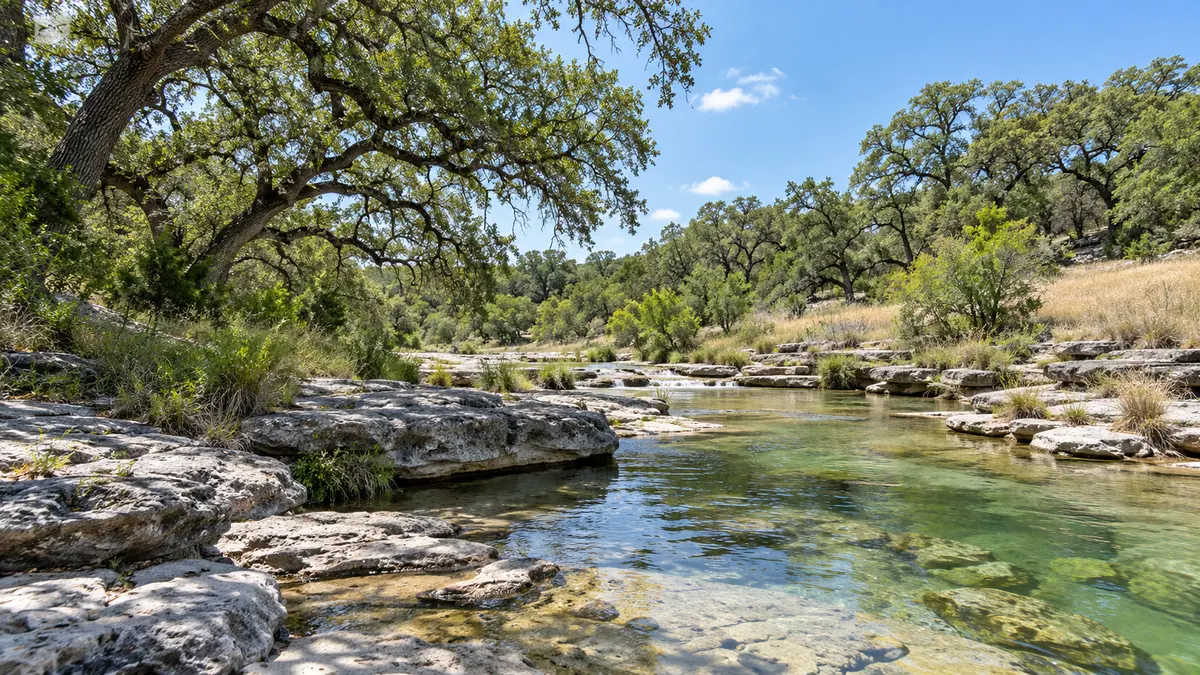
By Oct 21, 2025, JCB had completed site-development work and begun vertical construction of the production and office buildings. Architectural design was led by RVK. R&S Excavation completed mass grading, while Ella Contracting handled utilities. Texas-based Joeris General Contractors was leading the next construction phase. JCB continued to describe the development as a one-million-square-foot factory on a 400-acre site, with an expected workforce of 1,500. Its published schedule still envisaged hiring from late 2025 and production beginning in mid-2026. Operations director David Carver highlighted the work of the site-development teams. Fox-Marrs associated the expanded factory with producing closer to customers, shortening delivery times and reducing supply-chain risk. Those benefits remained the company’s expectations for the additional capacity. Completed site-development work included:
- Moving more than one million tons of dirt.
- Moving 119,000 tons of select fill.
- Installing nearly 19,300 linear feet of sewer, water and storm lines.
Recruitment plans and practical welding assessments
Recruitment and dealer plans became more detailed during a construction-site visit on Mar 30, 2026. Carver expected the first equipment to be produced in October and around 200 employees to be hired by then. JCB planned a further 600 hires in 2027, bringing employment close to 800 by that year’s end as telehandler production developed. The county incentive requirement called for 995 workers by 2027; Carver said the company still intended to meet it. His earlier aspiration was to reach 1,500 jobs in 2030 or 2031. Dealer Boss JCB was also preparing a 19,000-square-foot facility in Converse, with ten additional employees planned and more maintenance space. A separate dealership near the South Side factory remained at an early planning stage. Boss JCB general manager David Record suggested it could open in May or June 2027 and employ twelve to fifteen people. The dealer already operated in Austin and Corpus Christi.
JCB and South Texas Vocational Technical Institute began a workforce partnership with welding assessments on Aug 27, 2026. Twenty-two candidates demonstrated their skills at STVT’s San Antonio facility. The institute supplied its welding equipment, JCB provided testing materials, and company group leaders administered and evaluated the assessments. Successful candidates would form part of the initial skilled-manufacturing team, helping establish production processes at the new factory. The assessment cohort was a group of applicants, with subsequent selection and training still to follow. STVT president Vanessa Daniels described the arrangement as a direct connection between skilled tradespeople and an employer. JCB’s Charles Johnson highlighted access to candidates with varied backgrounds and experience. Recruiting supervisor Brandy Ramirez described an opportunity for the early employees to influence working practices and the factory’s culture. In the September update, JCB expected production to begin in the fourth quarter and anticipated adding more welding and other skilled-manufacturing positions as activity increased.

Savannah’s established production and equipment families
Savannah remained the established manufacturing center while JCB prepared its second North American factory. A May 2025 company account identified the Multi Terrain Loader, or MTL, as a Savannah-built version of the 3TS-8T Teleskid. JCB was supplying the machine to the United States Marine Corps under a $39 million contract. Its telescopic boom adapted a feature of the commercial Teleskid platform to the customer’s requirements. JCB employed more than 1,000 people at its North American headquarters, and approximately 10% of the workforce were military veterans. The company also supplied rough-terrain forklifts and High Mobility Engineer Excavators for military customers. Chris Giorgianni, vice president of government and defense, discussed the connection between equipment contracts and veteran employment. The planned San Antonio product range included telehandlers such as the 510-56. JCB presented these Texas plans alongside its existing Savannah production during the Celebration of Construction on the National Mall in Washington, D.C.
Another manufacturing milestone arrived in May 2025, when JCB completed its one-thousandth Light Capability Rough Terrain Forklift. The LCRTF was derived from an agricultural telescopic handler and retained more than 90% commercial content, with less than 10% adapted for military requirements. The United States Army awarded the company a ten-year contract in December 2016, and full-scale production began in late 2019. The model was exclusive to the Army at the time of the milestone announcement. Its work included loading and unloading vehicles and aircraft, moving supplies and handling ISO containers. The thousandth machine had been purchased and was preparing for shipment. JCB described continued production after that unit. Giorgianni identified the use of an established commercial machine platform as the basis for serving the military customer. JCB equipped the forklift with its own engine and a transmission designed for quick directional changes and traction across challenging terrain.
Compact loaders and a growing access-platform range
JCB’s compact equipment range expanded with the 4TS Teleskid and 400T compact track loader. A company account carrying a Nov 17, 2025 launch dateline described both as 109-horsepower machines developed at its Savannah headquarters. The 4TS combined a telescopic boom with a fifteen-foot lift height and rated operating capacity of nearly 4,000 pounds. Its stated SAE operating weight was 13,000 pounds, and overall height was six feet ten inches. The design allowed high-flow attachments to operate with the boom fully extended and incorporated a revised valve body intended to control boom drift. The 400T had a stated operating weight of 12,544 pounds. Its hydraulic specifications exceeded forty gallons per minute at 4,000 psi, and its redesigned chassis and larger cooling pack supported demanding attachments. Product manager Lee Tice attributed the changes to customer feedback.
JCB also previewed the A60E and A60EH articulated booms in September 2025 as additions to its powered-access family. The machines offered battery-electric and electric-hybrid drive options. Their specified platform height was 18.3 meters, with horizontal outreach of 11.9 meters and 360-degree rotation. Both accommodated up to three occupants, with a 300-kilogram unrestricted platform capacity and 454 kilograms under restricted conditions. The electric A60E used eight six-volt AGM batteries with a 400 amp-hour capacity. The hybrid A60EH added a 14.8-kilowatt Kohler KDW1003 diesel engine and a forty-liter fuel tank. Four-wheel drive, two-wheel steering and foam-filled, non-marking tires were common features. JCB said the models shared up to 52% of their components with the A45 family and recovered electrical energy during braking. Stowed length was 8.8 meters, overall width 2.5 meters and tail swing 0.65 meters. These specifications describe the wider access-equipment range; the Texas announcements identified product categories without assigning these particular models to the new factory.

Parallel investment at Rocester and the company’s results
The American expansion proceeded alongside investment in JCB’s existing British manufacturing base. On Oct 22, 2025, the company announced a £100 million modernization at its Rocester headquarters in Staffordshire. The program included a £60 million fully automated powder-paint plant, together with new machining centers, friction welders and cylinder-boring machines. The paint installation was part of the larger investment. Rocester had been JCB’s home since 1950. Anthony Bamford described Britain as the company’s home while acknowledging expansion overseas, including America. He said more than 8,000 of its global workforce of over 19,000 were in Britain and around three-quarters of British production was exported. The announcement coincided with preparations for the company’s eightieth anniversary on Oct 23, 2025. JCB was founded by Joseph Cyril Bamford on that date in 1945. The new British equipment investment covered production processes at an established factory complex while the Texas project added a new manufacturing location.
JCB published its 2025 financial results in September 2026. Turnover was £5.7 billion, compared with £5.8 billion in 2024. Profit before tax was £642 million, against £687.3 million a year earlier. Machine sales totaled 113,498 units, down from 119,848. The company remained debt-free with no net borrowings. Macdonald described a more favorable product and market mix as supporting broadly stable turnover while machine volumes fell by around 5%. He also identified flat demand in North America and a 12% market contraction in India, two important markets for JCB, while saying the company had increased its global market share. At that date the business described 23 factories and more than 20,000 employees worldwide. George Bamford was to become joint chairman alongside his father, Anthony. Macdonald anticipated moderate market growth during 2026 and linked the company’s ability to serve additional demand with new capacity in Texas and the modernization program in Staffordshire.



















Leave a comment