
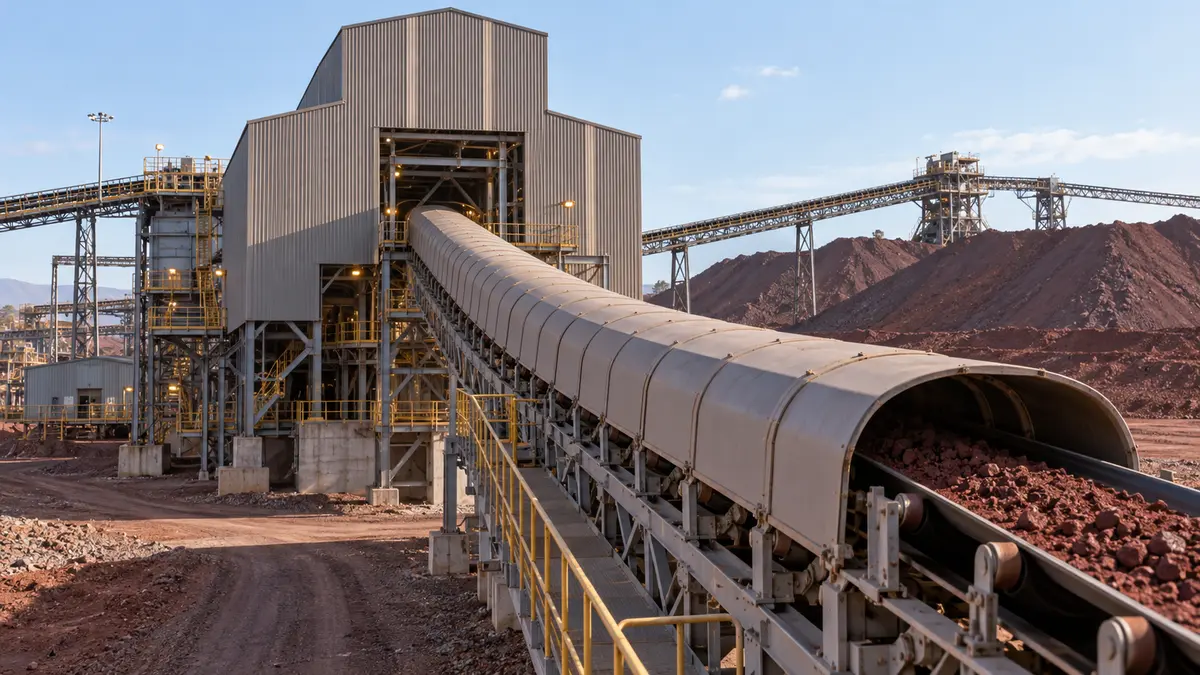
A planned HBI plant in Kursk Region
Mikhailovsky HBI LLC began building a hot briquetted iron plant in the Zheleznogorsk district of Kursk Region in Russia. On Jul 18, 2025, acting governor Alexander Khinshtein announced an investment of about 80 billion rubles, more than 400 planned jobs and a scheduled 2028 start. Pellets would come from the neighbouring Mikhailovsky GOK plant.
The earlier project estimate was 80.5 billion rubles. When the project first became public in 2021, its proposed capacity exceeded two million tonnes a year, with an opening planned for the first half of 2024 and a cost above 40 billion rubles. Mikhailovsky HBI’s owners were USM Metalloinvest, with 55%, and A. V. Varichev Mikhailovsky GOK, with 45%. Interfax

The neighbouring mine and pellet production
Mikhailovsky GOK’s development began with the 1957 decision to build an enterprise at the Mikhailovsky iron ore deposit in the Kursk Magnetic Anomaly. Its first bucket of ore was extracted on Jun 10, 1960. An ore train left for the Novo-Tula metallurgical plant on Jun 20, 1960. Ten years after mining began, cumulative extraction had reached 100 million tonnes. Cumulative extraction reached one billion tonnes on Jul 2, 2004, and two billion tonnes in September 2025. By the latter milestone, the open pit measured 5.9 kilometres long and 2.6 kilometres wide, with a depth of 390 metres. Excavators with 25-cubic-metre buckets and trucks carrying up to 240 tonnes worked in the pit.
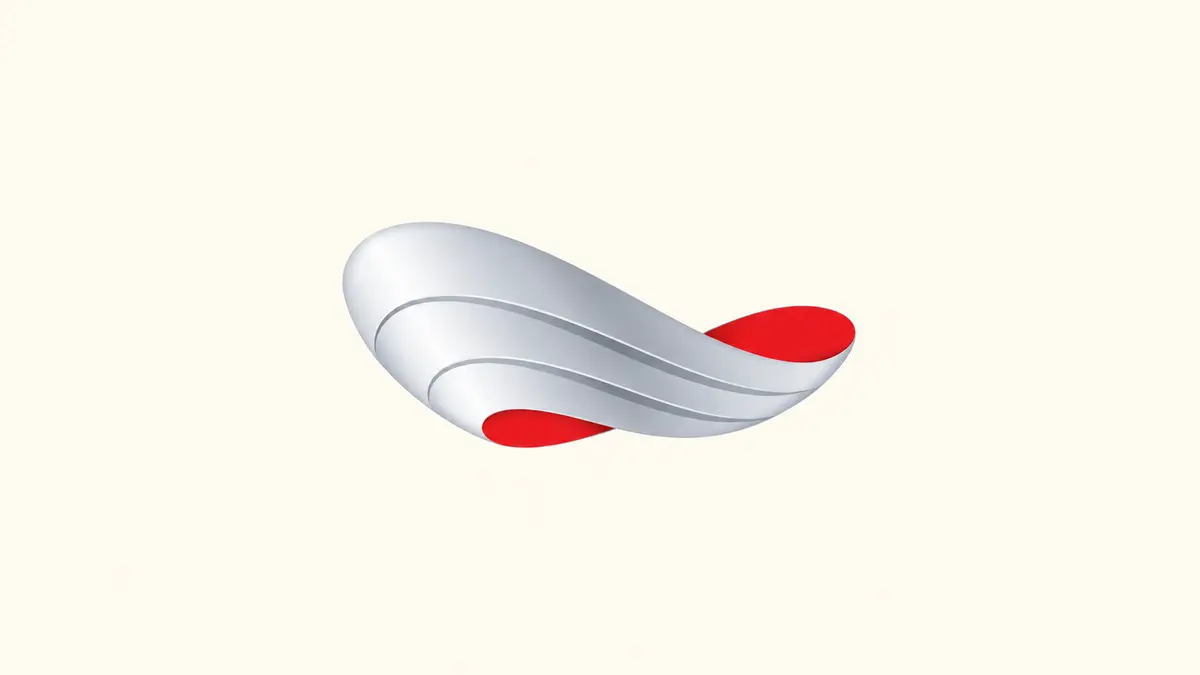
The pellet plant combines iron ore concentrate with bentonite, limestone and other additives to form a wet mixture. Rotating drums, 3.6 metres in diameter and 14 metres long, form raw pellets up to 16 millimetres across. Heat treatment then proceeds through drying, heating, firing, heat recovery and cooling, with furnace temperatures reaching 1,300°C. Natural gas supplies the firing process. The resulting pellets are the mining enterprise’s finished product for subsequent metallurgical processing.
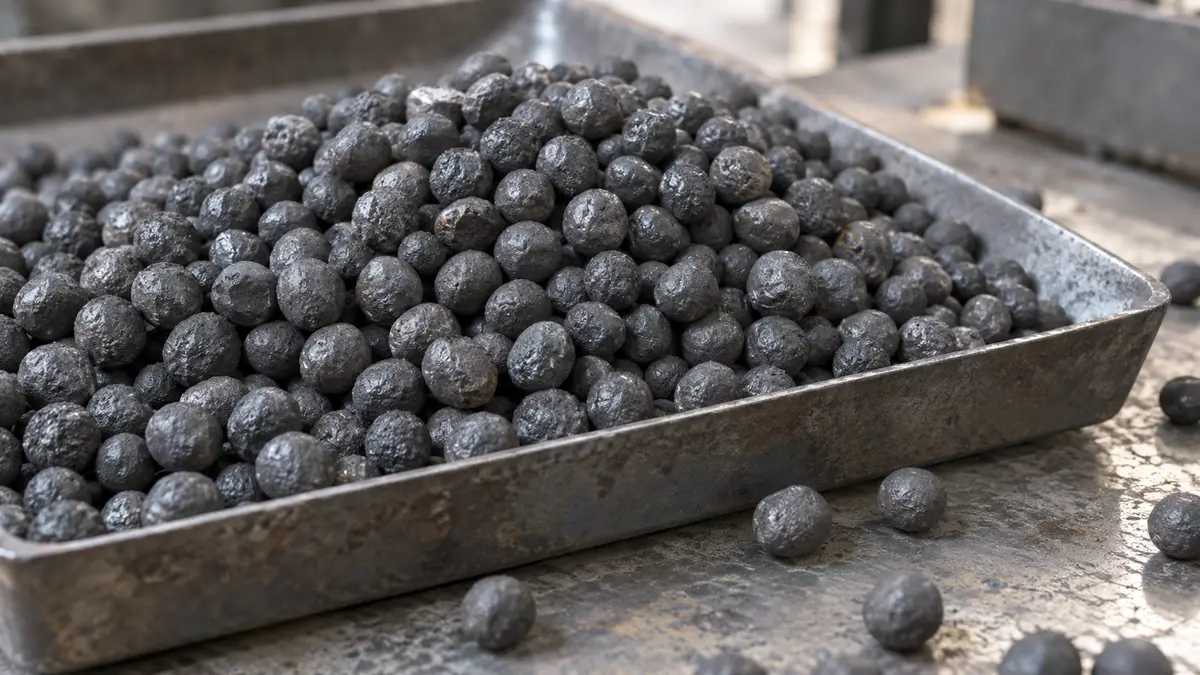
Moving ore from the pit
The mine’s transport redesign addressed restrictions on further excavation. The western slope had reached its long-term position, waste dumps bordered the southern and eastern sides, and railway infrastructure occupied substantial space inside the pit. Advancing northward required more overburden removal. The selected crushing-and-conveying approach moves ore by truck to an in-pit crusher, then by conveyor to a surface buffer stockpile, where excavators load trains bound for the processing plant.
The first conveyor complex opened in 2020 with a design capacity of 15 million tonnes a year. Its two-belt arrangement lifts ore 215 metres on a 700-metre conveyor at a 37-degree inclination. The second complex, launched in December 2024, has a gentler route, with inclinations of four to 13 degrees, 2.4 kilometres of conveyors and a maximum belt speed of 5.25 metres per second. Its equipment includes four belt conveyors, three transfer nodes, crushing, storage and loading facilities. Automated controls manage operating sequences and retain process data. Its announced annual design capacity was 35 million tonnes.

The railway connection to processing
In March 2025, Mikhailovsky GOK completed the reconstruction of Karyernaya station, increasing its throughput by at least 30%. The station handles ore dispatched to processing and overburden moved out of the pit. Planned rock transport through the upgraded node reached up to 69.4 million tonnes a year. Chief railway engineer Viktor Zhitkov identified 11 kilometres of new track, reconstructed existing tracks, new crossings, switches, roads, lighting and communications among the completed works.
The station could handle more than 220 pairs of trains a day, while the ore transport distance fell from 16.7 to 12.8 kilometres. More than 60 kilometres of signalling cables support microprocessor control of signals, centralisation and interlocking. LED optical systems equip the train and shunting signals. Across the enterprise, 16 stations regulate a railway network extending 366.77 kilometres. Its trains carry more than 120 million tonnes annually across several categories: ore, overburden and finished products. That network-wide cargo figure covers different materials and routes.

Upgrading the iron ore concentrate
Mikhailovsky GOK began testing fine screening in 2018, studying a Derrick-equipped section for a year and a half. Construction of the concentrate upgrading building entered its active stage in 2021, followed by pilot operation in autumn 2022. The building’s design capacity is up to 16.4 million tonnes annually. Development specialist Yulia Blokhnina described production of several concentrates with iron content reaching 71% and reduced silica, used for improved blast-furnace pellets and DR-grade pellets for metallisation.
The process separates ordinary magnetite concentrate on 53-micrometre screening surfaces, then treats the larger and smaller fractions through different routes. Vertical mills regrind the coarser fraction. Equipment includes:
- Derrick Stack Sizer screens;
- Metso Vertimill mills and hydrocyclones;
- RIVS flotation systems and ceramic filters.
The main plant now supplies concentrate containing no more than 63.9% total iron for further upgrading. Earlier production used additional hydraulic classification to obtain saleable concentrate containing at least 65.1% iron. Blokhnina estimated annual savings of about 130 million rubles after removing a redundant grinding stage, through lower maintenance, grinding-media and electricity costs. Her estimate concerns that specific process change.
Updated crushing equipment
In July 2025, the plant completed industrial trials of a new medium- and fine-crushing cascade. Its replacement equipment was expected to raise crushing throughput by 200 tonnes of ore an hour. The targeted particle size was no more than 12.6 millimetres for 80% of processed ore. Metalloinvest linked the finer feed to improved downstream grinding productivity and lower specific consumption of electricity and grinding balls.

The cascade contains cone crushers, two screens and a feed conveyor. Pre-start alarms form part of its safety systems. Operators can adjust discharge gaps remotely instead of making manual adjustments, and operating parameters appear on a screen in real time. The control system alerts staff to potential interruptions so that technologists can respond. At the time of the announcement, three of the plant’s 18 medium- and fine-crushing cascades had been renewed and another was being assembled. Managing director Anton Zakharov placed the equipment replacement within the enterprise’s continuing programme of production, quality and safety improvements.
Research, design and implementation
The TOMS Institute participated in developing the concentrate upgrading technology alongside Metalloinvest, Mikhailovsky GOK and the National University of Science and Technology MISIS. In December 2025, the specialists received a Government of the Russian Federation science and technology award. TOMS general director Arkady Senchenko was among the recipients. The institute’s work covered comprehensive research, the technological regulations, design documentation and its required examinations, working drawings and supervision by the designers during implementation.
The combined process brings fine screening, regrinding and reverse cationic flotation into a single upgrading scheme. TOMS identified its ability to treat complex, difficult-to-beneficiate ore while controlling iron content and reducing silica. Its stated output range was 67% to 71% iron across the relevant concentrates. These grades enable production of DR-grade pellets used as feedstock for direct reduced iron. The institute associated the implemented technology with a broader resource base, improved production economics and reduced environmental load. Those assessments belong to the research organisation involved in the project. At the award ceremony, Prime Minister Mikhail Mishustin credited the participating enterprises’ teams with work that strengthened Russia’s position in the international market.
A separate oxidised quartzite project
Metalloinvest announced another resource-processing project at Mikhailovsky GOK in June 2024: a plant for oxidised ferruginous quartzite. The company’s agreement with Kursk Region placed its estimated investment at 210 billion rubles, with production planned to start in 2028. Its design capacity exceeded seven million tonnes of premium concentrate annually, with possible expansion to 11 million tonnes.

The planned concentrate would support production of pellets containing up to 68% iron and low silica for direct-reduction metallurgy. The figures describe the proposed quartzite plant and its concentrate stream. The neighbouring HBI construction announcement carries its own investment estimate and commissioning timetable.
Maintenance at the pellet plant
In March 2026, Mikhailovsky GOK returned roasting machine No. 2 to operation after an early completion of scheduled repairs. About 150 specialists worked around the clock for ten days. The work covered mechanism maintenance, replacement of tracks used by the travelling carriages and side seals, and restoration of smoke exhaust fans. The machine is a principal unit of the pellet production plant.

Chief mechanic Andrey Baranov described daily monitoring of equipment condition and recording of observations in a mobile application connected to a common information system. The collected information helped staff prepare replacement parts before the maintenance work. A major summer overhaul of the same machine and work on roasting machine No. 3 beginning in April remained scheduled activities at the time of the March announcement.
Dust capture and water projects
In September 2026, Mikhailovsky GOK completed upgrades to gas-cleaning systems on two drying drums at its crushing-and-screening plant. More efficient countercurrent cyclones replaced the previous grouped cyclones, and the dust-settling mechanism was improved. Operators monitor the automated process from a control screen. The updated installations also allow servicing while the main production equipment continues operating.
Chief environmental specialist Tatyana Gnezdilova associated the project with a filtration efficiency target of 97% and Metalloinvest’s programme objective of reducing atmospheric emissions by 8% by 2030. The drying section has 11 gas-cleaning installations, six of which had already undergone modernisation. Completion of the wider equipment renewal programme was planned for 2028. A separate Clean Water project involved reconstruction of a drainage-water pipeline from the shaft No. 5 site, with the stated objective of eliminating discharges into water bodies by 2028. Both longer-term objectives remain programme targets. Gas-cleaning upgrade details
Slurry transport inside the plant
The processing plant was also renewing its hydraulic transport system in June 2026 to handle increased equipment loads. A replacement sump increased usable storage volume by a factor of 1.5. Two new pumps were installed for each of four sections, together with new pipelines. The works were close to completion, with specialists still adjusting automation and information systems. The plant had previously carried out equipment modernisation for filtration.
Restoring primary crusher performance
A scheduled overhaul of the plant’s primary crusher ended in August 2026. Workers renewed principal equipment elements, including the frame, crushing cone and driving components. The work followed the planned timetable and restored the equipment’s specified operating parameters. The crusher receives material after extraction in the pit; its stated purpose after the repair was to handle the ore volumes envisaged in the production plan.
The conveyor’s later operating milestone
Metalloinvest announced completion of trial operation of the second conveyor complex in July 2026. Its reported monthly throughput had reached 2.4 million tonnes of ore, and investment in the project totalled 10.4 billion rubles. Chief executive Alexander Popov associated the revised transport layout with bringing approximately 500 million tonnes of higher-iron-content ore reserves into processing after removal of railway infrastructure from those areas.
Popov also identified a reduction of ten traction units and seven transfer points, alongside a lower stripping ratio. Metalloinvest and Uralmashzavod’s joint engineering team addressed additional technical tasks revealed during trial operation and continued improving equipment reliability, service life and efficiency. Uralmashzavod chief executive Yan Tsenter described the project as requiring the manufacturer’s principal engineering competencies. The July statement identifies an operating milestone and a monthly rate. The earlier 35-million-tonne annual design figure retains the basis on which it was announced in 2025.
Pellet supply in the wider direct-reduction sector
In December 2025, International Iron Metallics Association fellow Chris Barrington examined pellet supply for direct-reduction plants in a technical article published by Midrex. His analysis used 2024 as its starting point and considered developments through 2034. It combined two supply cases and two demand cases, explicitly treating the results as scenarios. The demand model covered plants using purchased ore, and its assumptions placed Metalloinvest and other Russian producers’ DR-grade pellets within captive or domestic consumption.
Barrington identified delays to roughly 12 million tonnes of annual direct-reduction capacity in ArcelorMittal projects, associated with 17.5–18 million tonnes of pellet requirements. The company had cited slow development of viable green hydrogen, uncompetitive interim gas-based production in Europe, weaknesses in trade and carbon-border measures, and limited customer willingness to pay premiums. IIMA’s import-based data put cross-border pellet trade in 2024 at about 114 million tonnes. The technical assessment concerns the broader pellet market; its scenario assumptions are not a production forecast for the Mikhailovsky HBI project. Barrington’s pellet supply assessment
Direct reduced iron production in 2024
Midrex’s September 2025 industry statistics placed global direct reduced iron production in 2024 at 140.8 million tonnes, compared with 135.7 million tonnes in 2023. The increase was 5.1 million tonnes, or 3.8%. Worldwide annual output had grown by 32.7 million tonnes since 2019, an increase of approximately 30.3%. These are industry-wide direct reduced iron figures covering the relevant production forms.
Plants using the MIDREX process produced 76.2 million tonnes in 2024, up 0.6% from 75.7 million tonnes in 2023. Their share was 54.1% of total direct reduced iron production and 80.1% of production in shaft furnaces. Cumulative MIDREX output exceeded 1.46 billion tonnes across cold direct reduced iron, hot direct reduced iron and hot briquetted iron. Midrex compiles the series annually, with World Steel Dynamics auditing the collection and preparation methodology. Those totals provide the industrial background to HBI investment and its requirement for suitable iron ore feedstock.



















Leave a comment