
A manufacturing agreement for underground equipment
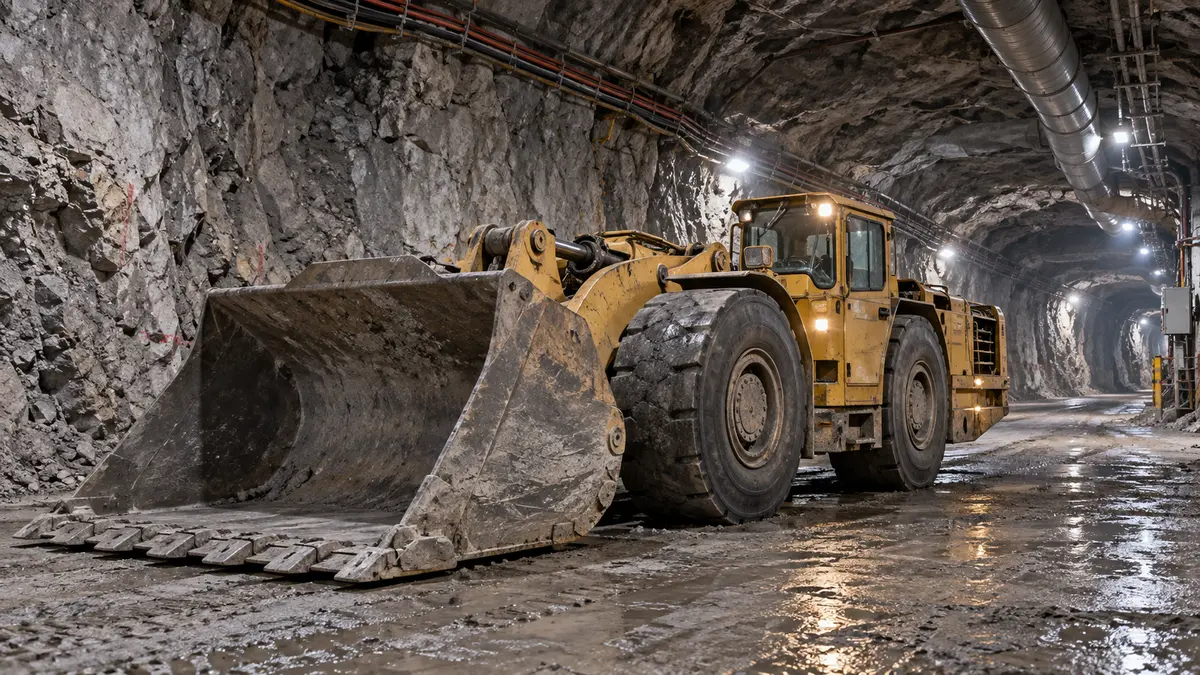
Nornickel and Belaz have agreed to establish a joint venture for underground mining machinery and a repair facility covering the production, restoration and maintenance of that equipment. Nornickel president Vladimir Potanin and Belaz chief executive Sergei Lesin signed the agreement in Zhodino, Belarus, on 7 September 2026. The programme combines new equipment development with a service base for machines used in Russia. Its stated objectives include autonomous mining technology and other innovations. The agreement sets out the partners’ intended manufacturing and maintenance activities, with no factory commissioning date specified.
Potanin described innovation and new technology as the direction of the mining industry and presented the partnership as a means of pursuing safer, more efficient operations. Lesin said the companies intended to develop underground machines, including equipment using alternative energy sources, under the Belaz brand. Those are the executives’ ambitions for the programme. The partners also expect the project to support domestic equipment supply, reduce sanctions-related risks and strengthen industrial cooperation within the Union State. The September agreement follows several years of cooperation involving prototypes, mine trials and technical development, alongside a separate refurbishment operation already established in Krasnoyarsk Territory.

The January 2025 partnership and its first machines
The earlier partnership agreement was signed in Zhodino on 23 January 2025 and announced by Nornickel the following day. It covered the development and mass production of underground dump trucks, load-haul-dump machines and auxiliary mining equipment. The proposed lineup included diesel machines and vehicles using alternative energy sources. Nornickel identified itself as the anchor customer and a participant in design improvement and testing. Six MoAZ-75851 underground dump trucks, each with a stated 50-tonne payload, were operating at the company’s Norilsk mines as test machines. Belaz had also assembled a MoAZ-4076 loader prototype with a 17.2-tonne payload.
That loader was intended to work with the 50-tonne trucks, with shipment to Norilsk planned for February 2025. The companies intended to refine the designs using trial results, operating experience and industry practice. Their agreement also addressed major overhauls, maintenance and timely spare-parts supply. Nornickel senior vice president Nikolay Utkin discussed a possible repair base in Krasnoyarsk. The parties estimated that Nornickel represented about half of Russian mining companies’ equipment demand and expected the new production facility to cover almost all those needs. The demand share and supply coverage were their estimates.
Mine trials, factory tests and the next equipment lineup
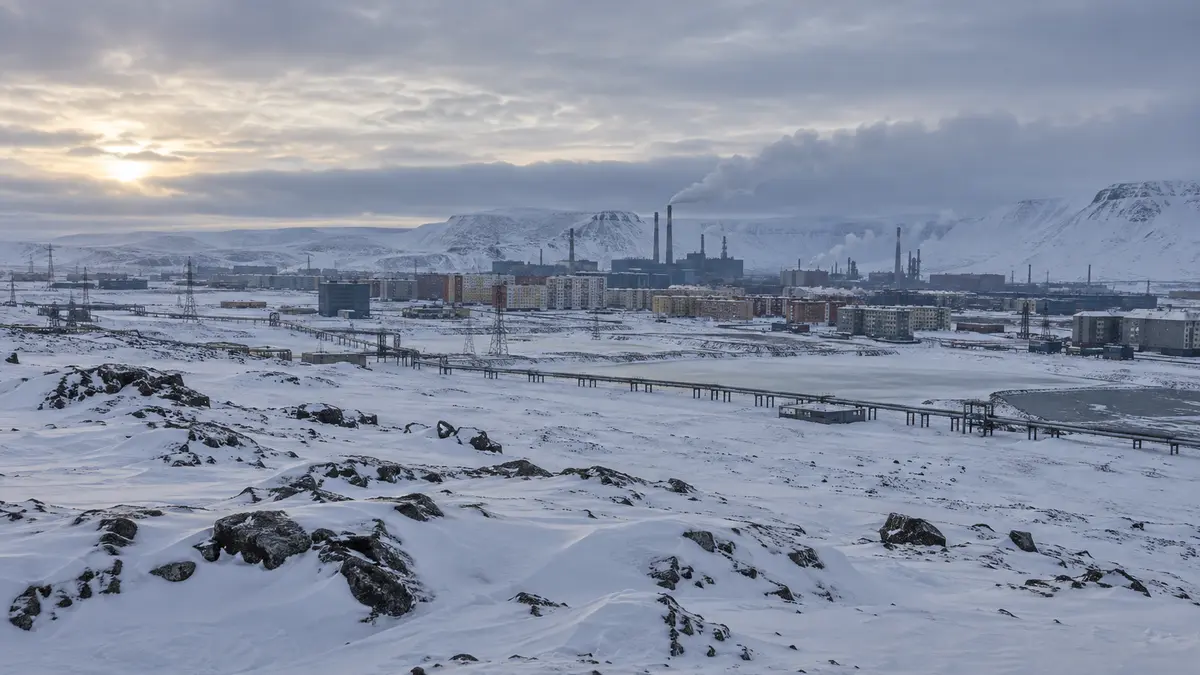
By September 2026, Nornickel and Belaz described six MoAZ-75851 trucks and the first MoAZ-4076 load-haul-dump machine as undergoing trials in Norilsk. Their cooperation on developing and serially producing underground equipment had begun in 2022. The newer equipment undergoing factory tests included a Belaz-75855 underground truck with a 45-tonne payload and a Belaz-79550 loader with a 17.2-tonne capacity. The announcements therefore identify both different model designations and different test settings. The 50-tonne figure belongs to the earlier MoAZ-75851 trucks; the 45-tonne figure belongs to the Belaz-75855 described in the September programme.
Nornickel participates in refining the machines’ technical characteristics, testing them and improving their specifications. Electricity and hydrogen feature among the proposed alternatives to diesel. The hydrogen research includes possible palladium catalysts in a production unit carried aboard a mining vehicle. This is a prospective research direction, with no demonstrated vehicle-level efficiency or operating range supplied.
- Battery-powered load-haul-dump machine: factory testing underway.
- Battery-powered mine trucks: pilot-industrial tests planned for 2027.
- Self-propelled people and freight carriers: various development stages.

Sosnovoborsk’s proposed capacity and the April plans
In April 2026, Maxim Kotelnikov, director of industrial asset management at Nornickel’s Polar Division, described a proposed Belaz joint venture in Krasnoyarsk Territory at the Mining World forum. The planned Sosnovoborsk facility would have capacity for 150 mining-equipment units annually. Lease documents for the site had already been received. Kotelnikov described the company’s use of Chinese machinery alongside its cooperation with Belaz. Nornickel had experienced difficulty obtaining new Western mining equipment since 2022, and had attributed part of its 2025 metal-production decline to adapting equipment from new suppliers. That explanation was the company’s assessment of its operating circumstances.
Kotelnikov said the partners had engineering, development and design capabilities for progressing their own machines, while acknowledging the time established suppliers had spent developing reliable vehicles. He also described cooperation with Krasnoyarsk enterprises to overhaul machines approaching the end of their service lives. Three units were at an advanced readiness stage and were expected to rejoin the fleet during the summer; ten overhauls were planned in total. These April figures describe the proposed manufacturing capacity and the refurbishment programme separately. The subsequent September agreement identifies production and full-cycle repair as parts of the partners’ wider programme.
What the Krasnoyarsk overhaul operation does
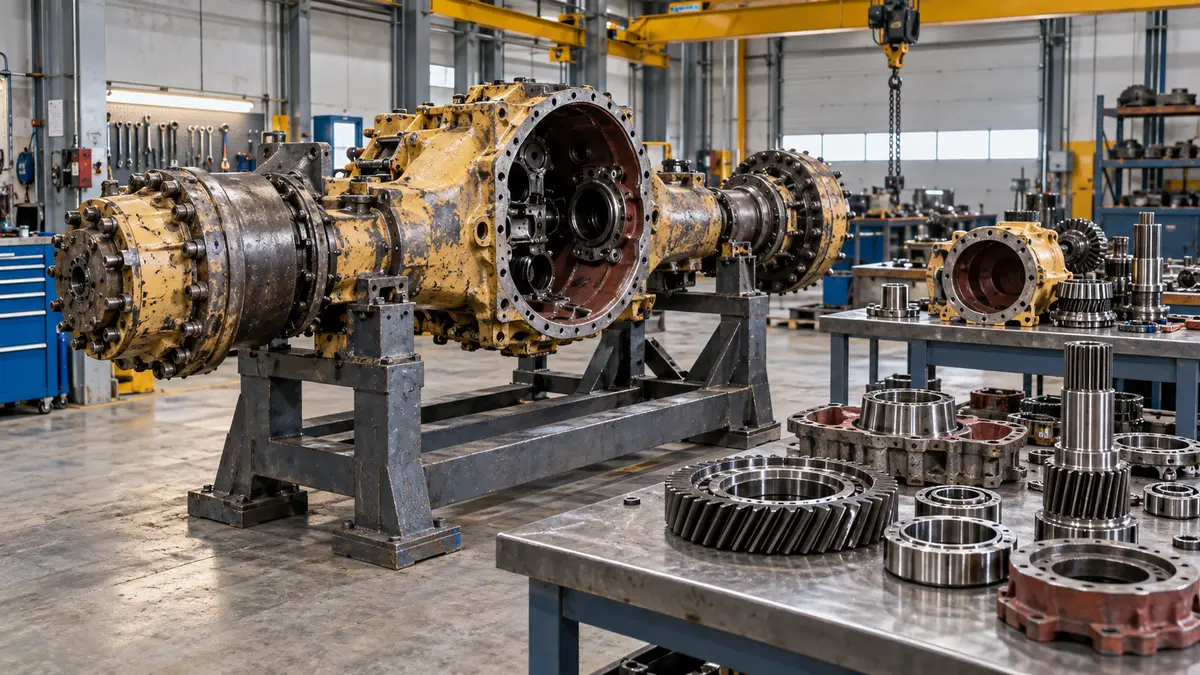
Nornickel established a full-cycle refurbishment operation for underground machinery in Krasnoyarsk. On 21 April 2026, its first overhauled mining vehicle was being prepared for final assembly, testing and shipment to Norilsk. The city offered lifting equipment and machine tools needed for the work. The process covers disassembly, repairs to units and assemblies, restoration of metal structures, reassembly, commissioning and road testing. Nornickel-Technics chief executive Andrey Skokov said cooperation with local contractors provided the expertise required for resolving technical issues during the repairs. The company estimated that an overhaul could add three to four service years.
Its estimate put a complete loader overhaul, including logistics, at about half the cost of a new machine. The refurbishment programme moves vehicles mainly along the Yenisei from Norilsk during a navigation season of approximately four months. An alternative route runs by sea to Arkhangelsk and then by road or railway to Siberia. Logistics are included in the company’s economic assessment. Work on the first three machines refined engineering solutions and introduced Russian high-pressure hoses, radiators, fire-suppression systems and autonomous lubrication systems. Cost and service-life benefits remain company estimates.
Earlier underground communications and autonomy planning
Nornickel’s underground automation programme predates its current equipment-manufacturing agreement. In November 2019, then chief operating officer Sergey Dyachenko described a plan for the Glubokaya mine, situated two to two-and-a-half kilometres underground, to become almost fully autonomous by 2025. He presented it within the Technological Breakthrough programme spanning ore extraction and metal production. At that time, the company had installed 189 kilometres of fibre-optic connections and more than 1,400 Wi-Fi access points in its mines. The infrastructure supported online tracking and positioning of personnel, equipment and ore movement, with operating information supplied to control rooms.
Dyachenko said approximately 80% of production processes could be monitored in real time. He put infrastructure readiness for remote control at 60%, with 40% of drilling equipment capable of automated operation. A simulation system combined underground geometry, transport information and production targets to calculate machinery requirements and assess remotely operated equipment. The company was considering 5G and LTE connections and developing digital twins. Its forecast placed the economic effect of the technology and related efficiency projects above $400 million by 2030. These figures and milestones belong to the 2019 account; they retain their original reporting period and forecast status.

Training for underground and remotely controlled machines
Nornickel’s training arrangements include an underground facility in the operational workings of the Anhydrite shaft at Kayerkansky Mine. The Norilsk training infrastructure also contains classrooms and a production-training complex equipped with simulators. Its Corporate University branch in Monchegorsk provides training for employees at the Kola site. Employees used virtual-reality exercises for personal protective equipment and navigating underground workings during 2024. Three-dimensional simulations reproduce mine infrastructure and machinery operations. Approximately 350 employees used simulator-based training during 2024, while more than 200 operators of underground self-propelled machines receive practical training at the underground facility annually.
Employees were also being trained to operate machinery through remote-control technology as preparations for unmanned mining continued. Across the wider Corporate University, more than 73,000 employees received training in 2024. Its programmes covered more than 300 blue-collar occupations, approximately 90 continuing professional-education programmes and 80 additional training activities. Annual training averaged 126 hours per employee in 2024, with expenditure of RUB 1.27 billion for the year. These organisation-wide measures describe the company’s wider training system. The underground operator and simulator figures identify the narrower practical programmes associated with mine work and advanced equipment.

Personnel positioning and the digital mine environment
During 2024, Nornickel completed a precise personnel-positioning system at its Norilsk mines. A collision-avoidance system alerts operators when vehicles approach pedestrians or other vehicles at hazardous distances. Subsequent development added automatic slowing and stopping of self-propelled equipment when a nearby pedestrian is detected. The system also supports emergency notification and location finding, with functions for immobility detection, restricted-area access and proximity warnings. The company planned further work in 2025 on safe personnel routes and a mobile tool for supervisors. These are specific mine-safety functions described in its technology programme.
Nornickel’s 2024 technology programme included MinePRO, an automated mining and geological information system supplied by Russian developer OT-OIL and adapted to the company’s requirements. Implemented functions in 2024 covered mine-planning and design records and surveying calculations. Further work was intended to incorporate exploration planning, geological modelling and mineral-reserve tracking. A separate drilling-modelling project began in 2023. During 2024, software was adapted to the main rock types at Komsomolsky Mine, with measurements collected from test stopes to refine simulation coefficients. The programme planned subsequent controlled-blasting and simulated-cleanup-drilling trials to assess target performance before decisions about wider deployment.

Palladium catalysts: laboratory results and industrial-test plans
Nornickel’s proposed hydrogen work sits alongside an established portfolio of palladium research. In December 2023, its new-product-development head Dmitry Izotov discussed approximately 20 products at different development stages during COP28. Hydrogen applications included catalysts and membranes. He reported that substituting palladium for 30% of iridium in electrolyser catalysts had tripled catalytic activity during tests, while substituting it for 25% of platinum in fuel-cell catalysts had doubled activity. Those are the company’s reported results for particular catalyst applications. They describe chemical testing, with the proportions and comparison bases attached to the respective electrolysis and fuel-cell processes.
Izotov expected pilot trials with Asian partners in the first quarter of 2024, followed by industrial-site testing by prospective users. He also described a five-to-ten-year investment horizon exceeding $100 million for developing new palladium products. The programme’s targets concerned demand across several applications, including hydrogen energy, chemical products and solar technologies. His forecast for the projects then in development was 40 tonnes of additional palladium demand by 2030. The research portfolio provides dated context for Nornickel’s materials work, while the September 2026 equipment agreement identifies the specific prospective application of palladium catalysts in on-board hydrogen production.

Materials development and replacement-part manufacturing
Nornickel’s research projects in 2024 included work on functional requirements for autonomous and remotely operated mining machinery. The company allocated RUB 192.7 million to research and feasibility studies during the reporting year and completed 13 projects in that category. Wider innovation expenditure, including prototypes and battery and palladium technologies, was RUB 1.1 billion. Its research arrangements include an internal R&D policy and a panel responsible for consultation and expert reviews. The company’s materials centre worked on hydrogen applications and other palladium-based products, with industrial testing conducted with Chinese customers during 2024.
Additive manufacturing formed another part of the company’s 2024 technical programme. Work included scanning broken components, preparing three-dimensional printing documentation and determining the materials required for replacements. Three-dimensional printers were installed at several group enterprises, and a dedicated printing centre was operating. Nornickel was considering a larger printing facility serving internal requirements and external customers. Its nickel powders had undergone testing in Russia and were in the certification process in China. These activities cover parts and materials development. The parts and materials projects retain their separate development scope; the Belaz programme specifies mining machinery development, testing and manufacturing.
The Battery Technology Center’s separate research role
Nornickel inaugurated its Battery Technology Center in Saint Petersburg in September 2024, announcing the facility on 23 September. Its subject is nickel-containing cathode active material, an input for battery production. The research centre supports a complete cycle of material synthesis and testing using specialised process equipment. Its R&D team had already produced initial samples meeting the NCM 811+ specification and planned to develop additional products. A scientist assembles a battery cell in a dry room. A specialist demonstrates cathode paste used for electrode fabrication. These activities concern battery materials and laboratory development.
Vice president for innovations Vitaly Busko described the investment as a step toward developing the company’s own technological expertise and a scientific foundation for cathode-material production. He linked it to a wider goal of full-cycle battery production for electric transport. The centre’s expected results were intended to support subsequent battery-material manufacturing projects. The mining-equipment partnership has its own dated development stages: battery loader factory testing and proposed truck trials in 2027. Its announcements do not identify a battery chemistry or name this centre as the supplier of packs for those machines. The battery-material programme retains its independently stated research scope.



















Leave a comment