
A Wisconsin campus with room to grow
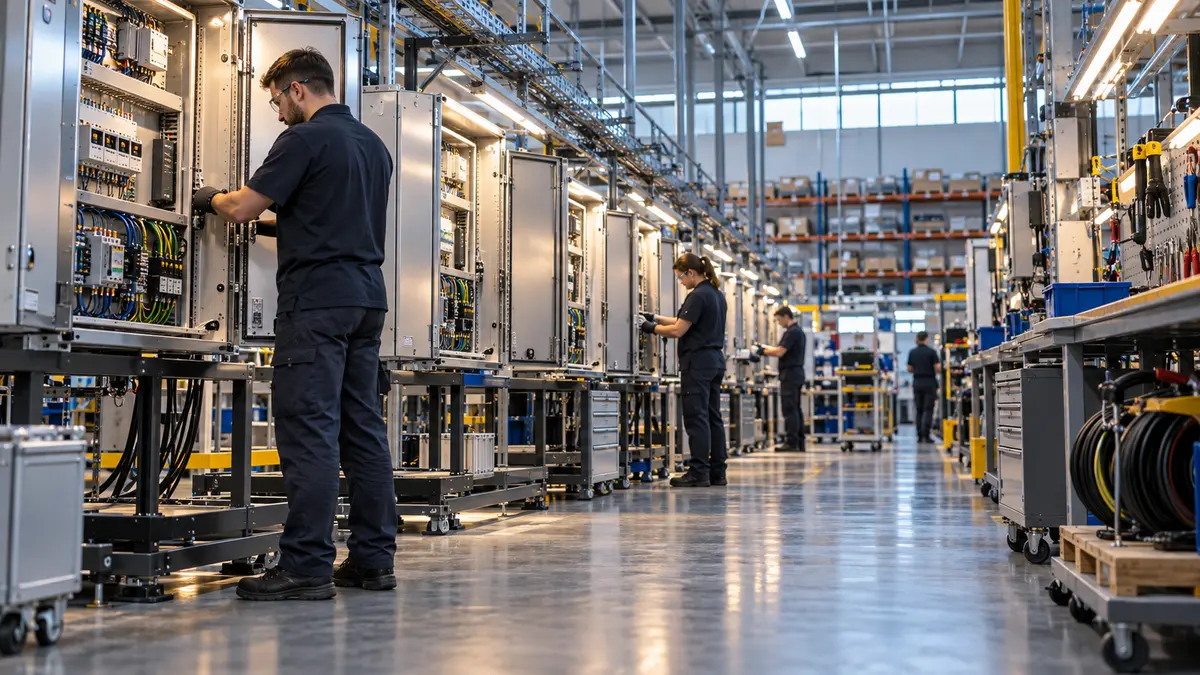
Rockwell Automation plans a southeastern Wisconsin manufacturing campus with more than one million square feet of production and warehouse space. Announced in November 2025, the project could become its largest manufacturing campus worldwide. The company did not disclose a campus budget, job count or specific product allocation.
CFO Christian Rothe described a site that would demonstrate Rockwell technology to visiting customers and be designed using Nvidia Omniverse. Those are plans for the future facility. Its digital design ambitions do not establish completed construction, operating capacity or measured factory productivity.

Robot production already operating in Milwaukee
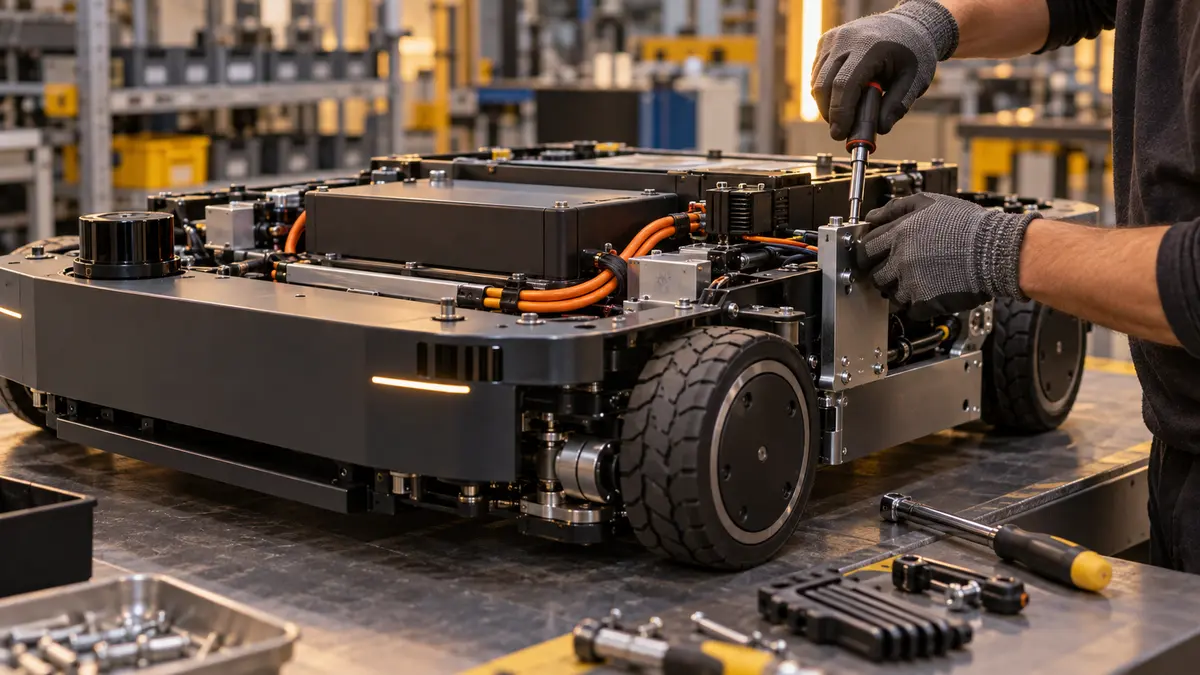
A separate manufacturing expansion was already tangible by October 30, 2025. Rockwell announced that the first autonomous mobile robots had rolled off a new line at its Milwaukee headquarters. The operation occupies 25,000 square feet and assembles OTTO 600 and OTTO 1200 robots. Manufacturing at the company's Ontario facilities in Canada continues alongside the Milwaukee operation. The announcement described added capacity and closer access to customers, rather than the closure or replacement of Canadian production.
The robots navigate using laser scans taken more than thirty times per second and share their locations with other robots. Rockwell said each unit travels more than fifteen miles during testing before it is considered ready to ship. That is a stated pre-shipment testing practice, not a published customer reliability statistic. The company planned customer tours for early 2026. The headquarters line therefore provides a current manufacturing example, while the much larger greenfield campus remains a separate investment project.

The growth peak preceding the investment programme
Rockwell entered the subsequent downturn after a strong fiscal 2023. Results released on November 2, 2023 put annual sales at $9.058 billion, an increase of 16.7%, with organic growth of 16.9%. Software & Control generated $2.886 billion in sales, up 24.8%, and a segment operating margin of 33%. Intelligent Devices contributed $4.098 billion, up 15.6%. Lifecycle Services supplied $2.074 billion, up 9%. The three businesses consequently entered 2024 from different revenue bases, even though each had expanded during 2023.
Total segment operating earnings reached $1.930 billion, with a 21.3% margin. Operating cash flow was $1.375 billion and free cash flow $1.214 billion. Annual recurring revenue grew 16%. The company initially forecast fiscal 2024 reported sales growth between 0.5% and 6.5%, and organic growth between a 2% decline and a 4% increase. These were expectations issued before the later inventory correction and guidance reductions; they should not be read as the year's achieved performance.
Early 2024: orders improved before shipments normalised
The January 31, 2024 results still showed modest growth. First-quarter sales were $2.052 billion, up 3.6%, while organic growth was 1%. Currency translation and acquisitions each contributed to the reported increase. CEO Blake Moret said orders had risen by double digits sequentially, with growth across segments and regions. He also identified high channel inventory and lingering supply constraints as factors affecting shipment timing. Improving order activity therefore coexisted with an unsettled delivery environment, rather than immediately restoring the prior year's growth rates.
Intelligent Devices sales declined 1% to $927 million. Software & Control increased 5.3% to $604 million, while Lifecycle Services grew 10.5% to $521 million. Total segment operating margin was 17.3%, below the comparable quarter's 20.2%. Operating cash flow amounted to $32.6 million and free cash flow was negative $35.3 million. Rockwell linked the cash comparison partly to incentive compensation paid for fiscal 2023 performance. The quarter combined positive reported sales with weaker profitability and a cash outflow after capital expenditure.

Customer inventory reshaped the May outlook
By May 7, 2024, Rockwell had reduced its annual outlook. Moret said customers, particularly machine builders, held more excess inventory than management had expected. Second-quarter sales declined 6.6% to $2.126 billion and organic sales fell 8.1%. The company revised its full-year reported sales forecast to a decline of 4% to 6%, and its organic forecast to a decline of 6% to 8%. The revision marked a substantial change from the positive reported growth range retained in January.
Software & Control sales fell 23.1% to $570 million, while Lifecycle Services increased 14% to $583 million. Intelligent Devices sales were $974 million, down 4.9%. Total segment operating margin fell to 19%, from 21.3% a year earlier. Operating cash flow was $120 million and free cash flow $68.6 million. Total annual recurring revenue rose 20%, with organic recurring growth of 17%. Product shipments weakened while contracted recurring revenue expanded.

Project delays persisted through the summer
The August 7, 2024 update brought another reduction in expectations. Moret reported additional customer project delays and attributed them to weaker consumer demand, high interest rates and uncertainty over tax, tariffs and stimulus incentives. He said distributor and machine-builder inventory reduction had progressed, but sequential order growth remained below expectations. Third-quarter sales fell 8.4% to $2.051 billion, with an identical organic decline. The annual forecast moved to approximately an 8.5% reported sales decline and a 10% organic decline.
Software & Control recorded $512 million in quarterly sales, down 31.8%. Intelligent Devices was comparatively steadier at $957 million, down 1.1%. Lifecycle Services grew 11.8% to $581 million and achieved a 19.3% segment operating margin. Total segment operating margin was 20.8%, close to the preceding year's 21.1%, despite lower revenue. Rockwell also recorded $69.8 million in restructuring charges, primarily severance benefits associated with a company-wide cost programme. The improving services margin and cost actions did not remove the underlying decline in consolidated sales.

The completed 2024 year showed divergent segments
Fiscal 2024 closed with annual sales of $8.264 billion, down 9%, and organic sales down 10%. The November 7 results showed Intelligent Devices sales of $3.804 billion, a 7% decline. Software & Control fell 24% to $2.187 billion. Lifecycle Services moved in the opposite direction, growing 10% to $2.273 billion. Its annual segment operating margin increased to 16.1%, from 7.2%. Services growth consequently cushioned the company-wide result without offsetting the much larger contraction in products and control software.
Total segment operating margin was 19.3%. Operating cash flow fell to $864 million and free cash flow to $639 million. Annual restructuring charges reached $97 million, primarily related to severance. Management's initial fiscal 2025 forecast allowed reported and organic sales to range from a 4% decline to a 2% increase. That outlook anticipated gradual sequential improvement after a weaker first quarter. It established the starting expectations for 2025, before the company later announced the Wisconsin campus and its broader five-year investment programme.

2025 began with stronger orders but lower revenue
On February 10, 2025, Rockwell reported first-quarter sales of $1.881 billion, down 8.4%, with an organic decline of 7.6%. Orders increased approximately 10% year over year and by mid-single digits sequentially. Moret described better order performance across regions and segments while acknowledging uncertainty around customer capital spending. Revenue remained below the prior-year quarter even as incoming business improved. The distinction matters for the expansion's context: an order recovery and an immediate increase in shipped product revenue are separate developments.
Intelligent Devices sales declined 13% to $806 million, and Software & Control fell 12% to $529 million. Lifecycle Services grew 5% to $546 million. Total segment operating margin was 17.1%, against 17.3% a year earlier. Operating cash flow increased to $364 million and free cash flow to $293 million. Rockwell attributed much of that improvement to the absence of an incentive compensation payout relating to fiscal 2024 performance. Total annual recurring revenue rose 11%.

Spring margins improved despite a sales decline
Second-quarter results released on May 7, 2025 showed sales of $2.001 billion, down 6%. Organic sales declined 4%, and currency translation reduced reported sales by 2%. Company-wide book-to-bill was approximately one, its stated normal historical range. Orders were therefore broadly matching sales during the quarter. Total segment operating margin increased to 20.4%, from 19%. Rockwell attributed that improvement to cost reduction, margin initiatives and positive price against cost, partly offset by compensation increases and lower sales volume.
Software & Control generated $568 million in sales, with organic growth of 2%. Intelligent Devices recorded $896 million, down 8%, and Lifecycle Services $537 million, also down 8%. Operating cash flow was $199 million and free cash flow $171 million. Management planned to offset tariff costs through pricing and supply-chain actions, incorporating that intention into its earnings guidance. The company retained its organic annual sales outlook of a 4% decline to a 2% increase. The forecast and tariff response remained expectations.

The five-year programme reached beyond one factory
In prepared remarks on August 6, 2025, Moret set out an investment programme of more than $2 billion covering plants, digital infrastructure and talent over five years. Capital expenditure would account for most of the programme, with the United States its largest beneficiary. This is company-wide spending, rather than a disclosed price for the greenfield campus. Moret also said Rockwell had achieved its $250 million year-over-year productivity goal one quarter early. That was management's assessment of existing productivity work, not a result attributable to a future Wisconsin facility.
Third-quarter reported sales grew 5% and organic sales more than 4%. Software & Control organic sales rose 22%, while Intelligent Devices grew 1% and Lifecycle Services declined 6%. Customer projects illustrated the portfolio's breadth: Freshpet selected Rockwell for its standardised designs at a planned Ennis plant, while Beam Therapeutics selected PharmaSuite manufacturing software. These are customer wins described by management. They illustrate planned applications across food production and life sciences without proving how the proposed campus itself will perform.
Annual recovery came with accounting distinctions
Results released on November 6, 2025 put annual sales at $8.342 billion, approximately 1% above fiscal 2024. Total segment operating margin increased to 20.4%. Operating cash flow reached $1.544 billion and free cash flow $1.358 billion. Fourth-quarter sales were $2.316 billion, up 14%, with organic growth of 13%. The year therefore finished with a stronger quarterly sales comparison and more cash generation, although annual revenue remained substantially below the $9.058 billion reported for fiscal 2023.
Reported annual earnings per share were $7.67, while adjusted earnings per share were $10.53. Rockwell recorded legacy asbestos charges and a non-cash Sensia impairment, and announced a planned dissolution of the Sensia joint venture during the first half of fiscal 2026. It also changed adjusted earnings definitions and recast comparative periods. Those distinctions prevent unqualified comparisons with previously published adjusted figures. For the following year, management forecast reported sales growth of 3% to 7% and organic growth of 2% to 6%, excluding the anticipated Sensia effects.
A dated 2026 update: product growth strengthened
The February 5, 2026 results provide a later update to the November 2025 investment announcement. First-quarter fiscal 2026 sales increased 12% to $2.105 billion, with organic growth of 10%. Intelligent Devices sales rose 18% to $953 million. Software & Control grew 19% to $629 million, while Lifecycle Services declined 4% to $523 million. The positive company-wide result therefore reflected stronger product and software businesses alongside a weaker services comparison. Total segment operating margin increased to 20.7%, from 17.1%.
Operating cash flow was $234 million and free cash flow $170 million, below the preceding year's $364 million and $293 million. Rockwell attributed the decline to incentive compensation timing and increased working capital, partly offset by higher pre-tax income. Total annual recurring revenue grew 7%. The company retained its reported sales growth forecast of 3% to 7% and organic range of 2% to 6%. These results demonstrate the company's operating position at the start of 2026; they do not establish output or savings from the proposed campus.
New Berlin and Mequon acquired clearer roles
Rockwell's fiscal second-quarter 2026 filing confirmed New Berlin as the greenfield location. It recorded the January purchase of the previously leased Mequon facility, used for engineering, development and manufacturing. These details followed the campus announcement. They distinguish a planned new manufacturing site from an existing facility moving into company ownership. Both belong to the broader investment programme; its total spending is not a disclosed budget for either property.
May 5 quarterly results showed sales of $2.239 billion, up 12%, with organic growth of 9%. Rockwell introduced enterprise operating margin, including corporate expenses, and reported 22.5%; it differs from earlier total segment margin. Operating cash flow was $320 million and free cash flow $275 million. The company also confirmed the April 1 Sensia dissolution and excluded divested businesses from second-half guidance. Its revised growth forecasts allowed 5% to 9% for both reported and organic sales. Location confirmation, current earnings and forward guidance describe different stages of the company's development.
Later growth requires a consistent comparison
The August 4, 2026 results extend the operating record further. Third-quarter sales were $2.313 billion, up 8%, while organic growth reached 10%. Divestitures reduced reported sales by 3% and currency translation added 1%. Software & Control sales increased 19% to $751 million. Lifecycle Services declined 12% to $482 million, but its organic decline was 2%; divestitures accounted for an 11% reduction. The services comparison therefore includes a changed business perimeter, rather than measuring only demand for an unchanged portfolio.
Enterprise operating margin was 22.3%, operating cash flow $724 million and free cash flow $654 million. Organic annual recurring revenue grew 6%. Management raised its fiscal 2026 reported and organic sales growth forecasts to 7.5%–9.5%. Those ranges remained forecasts when issued. The quarter offers three concrete distinctions for interpreting the expansion and the business supporting it:
- Reported growth includes currency and divestiture effects.
- Organic growth adjusts the comparative business perimeter.
- Quarterly earnings and revised guidance do not establish campus completion.



















Leave a comment