
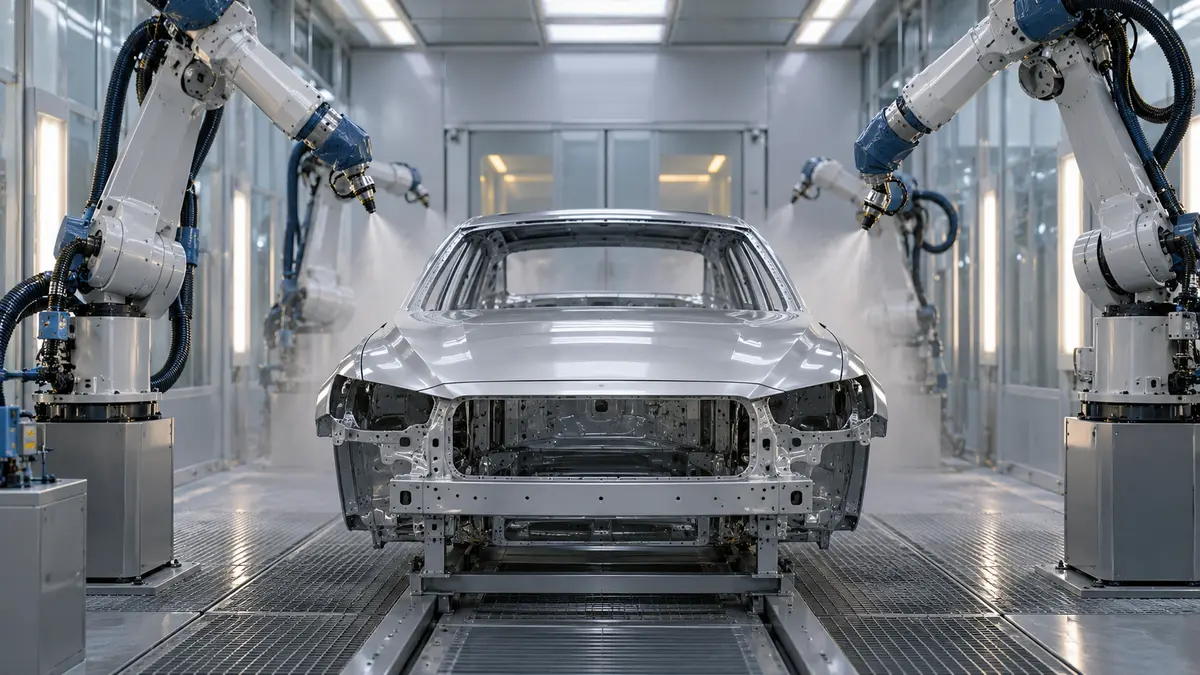
A new paint operation inside an established manufacturing campus
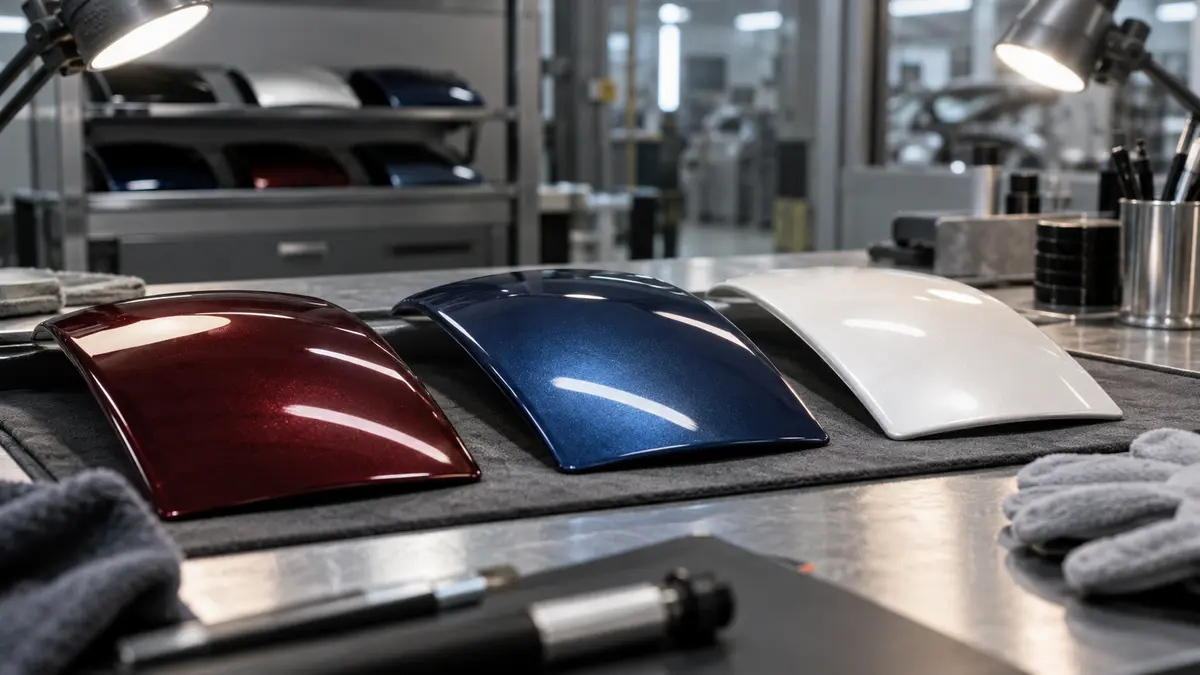
Toyota’s $922 million Kentucky paint investment adds a new production operation to a factory that already combines vehicle assembly, engines and a substantial network of component shops. The company announced the project in December 2024, with opening scheduled for 2027. The planned facility adds one million square feet and is intended to improve the accuracy of finishing work, shorten production lead times and expand the colors available to customers. Toyota Kentucky president Kerry Creech placed the project within the company’s longer programme of investment in Georgetown. Its announced environmental measures include a 30% reduction in carbon emissions associated with the new paint process and annual water savings of 1.5 million gallons.
The paint operation is one element of a wider restructuring of the Kentucky campus. Toyota also announced a $1.3 billion investment in 2024 to prepare for a three-row battery electric sport utility vehicle and battery pack assembly. The two announcements concern different parts of the manufacturing system: one concerns the vehicle programme and its assembly infrastructure, while the other concerns finishing capacity. The combined announced investment exceeds $2 billion. Toyota’s Kentucky paint project keeps the future opening date separate from the equipment and vehicles already operating on site. The 2027 paint opening is a target, rather than a statement that the new operation is producing finished cars.

Georgetown’s sequence of factory investments
Toyota selected Kentucky for its first wholly owned automotive manufacturing facility in the United States in December 1985, established the operation in 1986 and began making the Camry in 1988. A powertrain plant was announced in November 1987. The factory later expanded into additional models and production systems. A $360 million investment supported a dedicated Lexus ES 350 assembly line, which began producing vehicles in 2015 with annual capacity of 50,000 units. That sequence placed premium-car assembly alongside the existing Camry operation. The new paint investment therefore joins a campus with several generations of equipment, rather than a new location with a single vehicle line.
A $1.33 billion modernisation programme in 2017 included a 475,000-square-foot paint shop. Further investment supported the RAV4 Hybrid, whose Kentucky production began in January 2020 with annual capacity of 100,000 vehicles. Toyota announced another $461 million in 2021 for modernisation, manufacturing flexibility and powertrain development, including a new 2.4-litre turbo engine line. The K-Flex programme subsequently rebuilt the original Assembly Line 1 within an existing building while production continued. The sequence and project boundaries are documented in APEC’s November 2025 Kentucky case study, which incorporates plant interviews and manufacturer records. The earlier paint shop and the one announced in December 2024 are separate investments with different dates and sizes.
What the paint announcement measures
The proposed facility’s one-million-square-foot footprint measures space. The 30% carbon figure measures the expected reduction from the paint process, and the 1.5-million-gallon figure measures annual water savings. None of those quantities is a vehicle-output target. The announcement does not assign an additional number of cars per year to the new building or specify a numerical reduction in finishing time. Toyota instead identifies process accuracy, finish quality, lead time and color variety as intended changes. Each has a different role in the production operation: finish quality concerns the vehicle surface, while lead time concerns the duration of production activity.
The manufacturer’s December statement set the battery electric SUV programme’s market timing at 2026, whereas Manufacturing Dive’s recap of the earlier February announcement referred to a 2025 start. The paint operation retained a separate 2027 opening target. These dates belong to different announcements and are preserved with their respective contexts. APEC’s subsequent account also presents the paint investment as a 2024–2027 project. The campus’s changing vehicle programme provides a reason for Toyota to seek manufacturing flexibility, but the public paint announcement does not disclose a model-by-model allocation of the new building or a detailed sequence of transfers between the existing and planned finishing operations.

Production shops and their connected work
Georgetown’s manufacturing operation contains plastics, stamping, body welding, paint, assembly, engine production and die manufacturing. These functions produce different elements of the finished vehicle. The integrated campus also makes powertrain parts, including machined blocks, cylinder heads, axles and steering components. A nearby Production Engineering and Manufacturing Center began operating in 2017 and supports manufacturing technologies across Toyota’s North American operations. The paint operation sits within this larger industrial system, with vehicle bodies moving through manufacturing functions and technicians supporting both production equipment and utilities. Toyota’s announced finishing changes concern one stage of that system, rather than an independent final-product factory.
The Toyota Production System organises production around Just-In-Time and Jidoka. Just-In-Time aligns production with what is needed, when it is needed and the required quantity, including the management of materials between steps. Jidoka allows equipment to stop when abnormalities occur so that team members can intervene. The Andon alert system lets workers signal production problems and call for a response. Standardised work, error-proofing and continuous improvement support these practices. At Kentucky, those arrangements operate alongside equipment investment: the physical paint facility supplies production capability, while work standards and escalation arrangements govern how people handle abnormalities and maintain the flow of work through connected operations.

Water systems around vehicle finishing
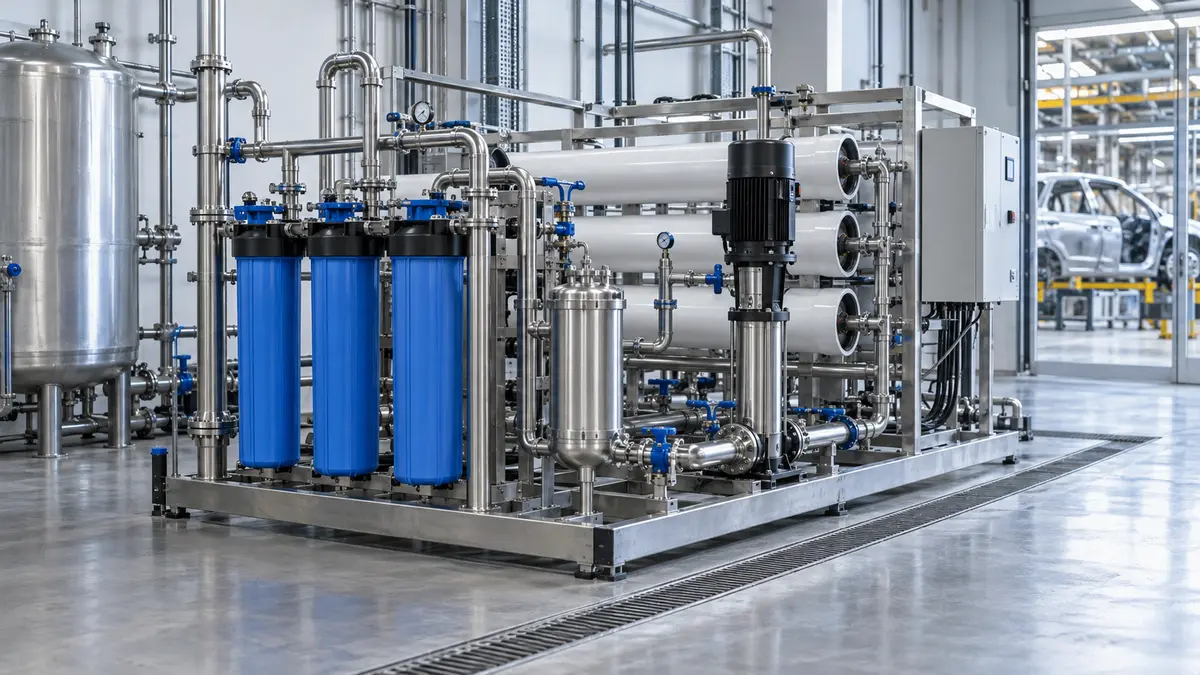
Toyota’s expected 1.5-million-gallon annual saving is attached to the announced paint investment. The Kentucky operation also has a separate reverse-osmosis water-reduction initiative. Reverse osmosis supplies treated water, and the plant’s programme works on water-production efficiency, standardised use and wastewater reduction. The 2025 APEC case study records the initiative as part of the site’s existing environmental work. It does not make the reverse-osmosis programme and the planned paint building interchangeable. They address water management through different project scopes: one is an existing treatment-system initiative, while the other is a saving forecast for the forthcoming finishing operation.
The Kentucky plant has participated in the Kentucky Excellence in Environmental Leadership programme, known as KY EXCEL, since 2006. Its environmental activities cover carbon, water, materials and biodiversity. Those categories place water treatment alongside energy generation and waste management without converting their measures into one numerical score. A water-saving quantity is expressed as a volume over a period; an emissions reduction requires its own comparison basis. The paint project’s annual gallon figure can therefore remain useful without assuming that it represents all of the plant’s water consumption, a percentage of factory demand or a published saving for every individual vehicle.
Electricity, gas and the paint-shop air supply
Energy projects on the campus include a landfill-gas partnership with Waste Services of the Bluegrass, established in 2014. Gas from solid waste fuels generators that produce electricity. Toyota estimated that this locally generated energy could support production of 10,000 vehicles annually. The company also launched a solar field in October 2025, covering nearly 30 acres and expected to generate approximately 15 million kilowatt-hours each year. Those are generation projects serving the manufacturing campus. They sit alongside the new paint process’s emissions target; they do not establish that the planned facility has already reached its expected carbon performance or that Georgetown operates entirely on renewable electricity.
A different improvement to existing paint operations received a Department of Energy Better Project Award in June 2026. Kentucky’s production engineers changed the Fresh Air Supply House serving Line 1 to use pre-tempered building air, reducing outside-air intake by more than 55%. Toyota put the resulting reduction in annual paint-booth energy costs at more than 80%. The earlier design used entirely outside air, which had to be conditioned for the process. The revised intake lowered the demand for treating that air while maintaining building temperatures. This operational change concerns the existing air-supply system; its energy-cost percentage is distinct from the carbon reduction forecast for the new 2027 paint facility.

Capacity and completed production
APEC’s 2025 plant account gives Kentucky annual capacity of 550,000 vehicles and more than 600,000 engines, and records 2024 output of more than 435,000 vehicles and 714,000 engines. Capacity and completed annual production describe different measures; the engine capacity statement is a lower-bound description rather than a ceiling of exactly 600,000. Engine output should consequently not be treated as an exceedance of a precisely stated maximum. The plant had assembled more than 14 million vehicles since the start of production. These figures concern the whole Kentucky operation, encompassing existing shops and assembly lines, rather than the additional paint building announced at the end of 2024.
The campus’s product mix also gives context to the modernisation programme. Toyota began producing the ninth-generation Camry there in May 2024, with that model offered exclusively with a hybrid powertrain. The site also manufactures the RAV4 Hybrid and engines. Different products share the broader campus without necessarily using identical assembly or finishing arrangements. The publicly stated vehicle capacity is an annual plant figure; it does not allocate slots to each model. The investment announcements likewise describe flexibility for future production while leaving detailed operating schedules undisclosed. Keeping models, engine units, floor area and project dates in their own categories preserves the practical meaning of the manufacturing figures.

Maintenance skills for changing equipment
Toyota opened a $3 million maintenance training centre at Kentucky in 2024, converting an existing building for on-site learning. The training investment accompanies changes to production equipment and provides a place to develop technical capability. The plant’s longer workforce programmes include the Advanced Manufacturing Technician course with Bluegrass Community and Technical College. The two-year associate-degree programme combines paid work at sponsoring manufacturers with classroom learning. Students ordinarily spend three days a week in the workplace and two days at college. Technical subjects include maintenance, robotics, automation, machining, programmable logic controllers and electrical systems, alongside expectations for attendance and presentations of public projects.
The technician programme began through the Toyota–college partnership in 2010 and formed part of the development of the Federation for Advanced Manufacturing Education. It spread to Toyota’s other U.S. manufacturing sites by 2017, and the Manufacturing Institute assumed stewardship of FAME in 2019. Kentucky’s nearby college manufacturing centre opened in 2017 and supplies training beyond Toyota itself. The local network therefore includes a vehicle manufacturer, educational facilities and other industrial employers. Advisory-board meetings take place twice a year, with quarterly reviews of training outcomes. Those arrangements allow the participants to review curriculum and workforce requirements as manufacturing systems change, including equipment used in utilities, machining and automated production.
High-school routes into manufacturing
The 4T Academy adds an earlier point of entry to the Kentucky training system. Toyota launched the programme in 2024 with Scott County High School and Great Crossing High School. The name represents Team, Teach, Together and Toyota. During the junior year, the programme combines four school days a week with one day at the academy, where experienced instructors introduce manufacturing work. Later in the senior year, students move into a paid internship at the Kentucky plant for four days a week. Successful participants may receive a conditional job offer, rather than an unconditional promise of permanent employment simply for enrolling in the course.
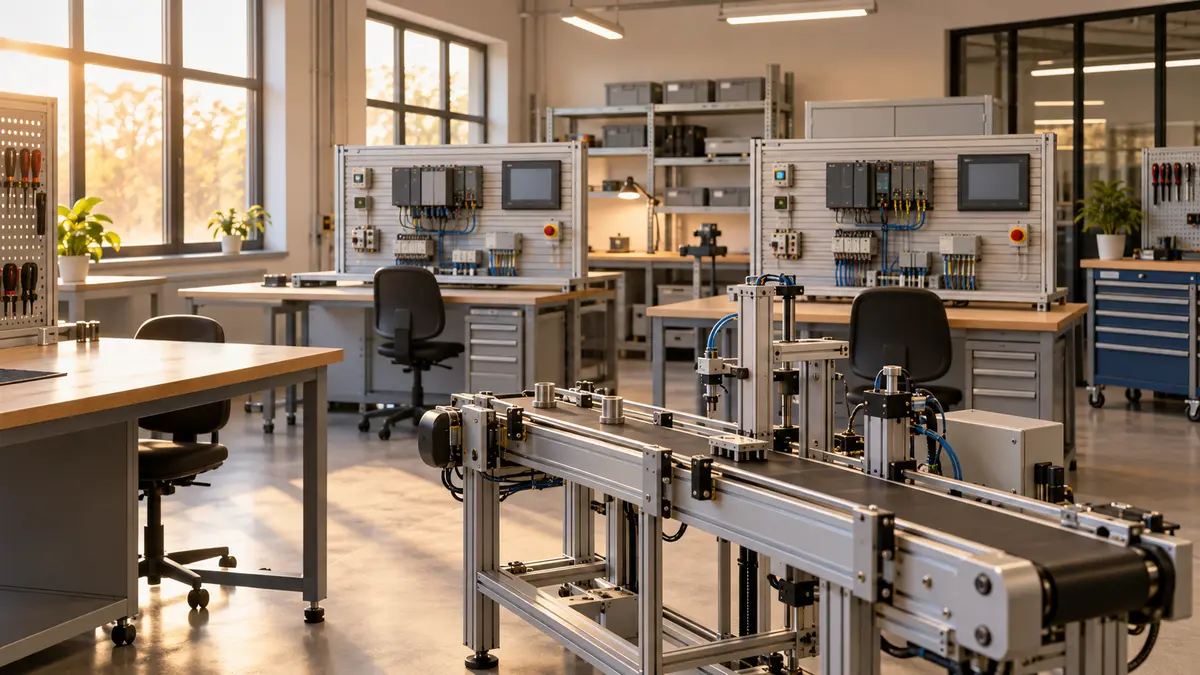
The academy includes a six-credit curriculum and 336 hours of hands-on Toyota training. A simulated production setting contains a skills dojo and moving production line, allowing learners to encounter manufacturing tools and processes before entering regular plant work. Toyota announced investment of up to $1 million to launch and sustain the academy. The separate Driving Possibilities initiative works with Scott and Fayette counties on literacy, language resources, education–industry connections and transportation barriers. These programmes occupy different stages of the training system: one provides high-school manufacturing experience, another supports technical-degree learners, and the maintenance centre develops skills within the existing workforce. Their budgets are separate from the $922 million paint-building announcement.

Suppliers and the local operating base
The Kentucky plant’s 2024 supply base included more than 350 suppliers across the United States, with more than 100 in Kentucky. A substantial part of the North American supply base is located within 120 miles of Georgetown. The manufacturing campus thus operates with both on-site production functions and external suppliers, rather than making every part within the new paint building. Full-time employment was approximately 10,000 in the period covered by the announcements. Toyota describes continued reinvestment as support for stable employment. That company commitment is distinct from a stated count of newly created positions: the paint announcement does not turn the existing workforce into 10,000 additional jobs.
Georgetown’s projects connect new finishing space, existing air-handling improvements, water treatment and workforce development within one long-established vehicle operation. Their public measures remain specific: the planned paint facility has its own investment, footprint and opening target; the Line 1 air conversion has an energy-cost result; and the training programmes have their own participants and facilities. The broader factory record includes decades of production in the United States. Training, equipment and resource projects operate within the same campus, with their own dates and measures: Kentucky’s factory and training operations include the separate 2026 paint-shop air-system improvement.
Project measures retained separately
- New paint operation: $922 million, one million square feet and a 2027 opening target.
- Expected process changes: 30% lower carbon emissions and 1.5 million gallons of annual water savings.
- Existing Line 1 air-supply redesign: more than 55% less outside air and more than 80% lower annual paint-booth energy costs, announced in June 2026.
- Training: an on-site maintenance centre, a college technician programme and the high-school 4T Academy.



















Leave a comment