
A larger zircon-concentrate market share
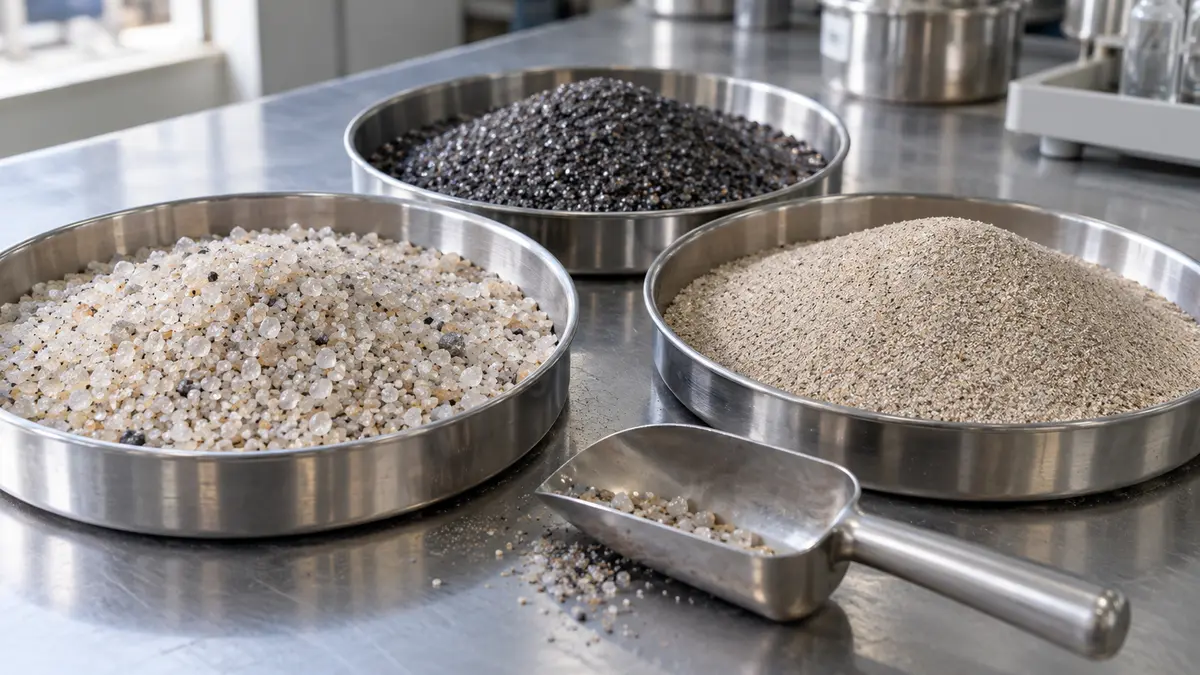
Tugansk Mining and Processing Plant Ilmenite plans to expand production at the Kuskovsko-Shiryaevsky site in Tomsk Region, Russia. General director Konstantin Sheptalin expects the second stage of the Titan project to raise the company's share of the Russian zirconium-concentrate market from 21% to 84%. He presented the forecast at the Mining, Enrichment, Metallurgy forum in Novosibirsk on 18 March 2026.
Sheptalin envisages about 17,000 tonnes of zircon concentrate annually in the period up to 2032, with excess production sold abroad. He identified Asian customers as potential buyers of the current quality without further refinement. The company plans three ore-sands lines of 2.3 million tonnes each by 2030, together with processing plants, infrastructure and a logistics terminal. Rosatom estimated the first phase of the second stage at 42.4 billion rubles. The Rosatom Nedra enterprise reached its existing design capacity of 575,000 tonnes of sands annually in May 2022.

The first plant's loaded startup
The existing operation began its technological startup in December 2021. During that year, the company completed construction of production buildings and auxiliary facilities, installed process and engineering equipment, and carried out commissioning without a processing load. Mining preparation proceeded at the Yuzhno-Alexandrovsky site before the factory began working with ore sands.
By 28 January 2022, the new factory was producing zircon, ilmenite and rutile-leucoxene concentrates in startup mode. Director Andrei Kabanov described the completed construction and equipment installation during a visit by representatives of the regional department responsible for subsoil use and oil and gas development. Its design throughput was up to 575,000 tonnes of ore sands a year. That figure referred to feed material processed, rather than the mass of finished mineral concentrates.
Acting department head Igor Kartashov linked the first full-scale rare-metals operation to the federal Technologies of New Materials and Substances roadmap. He expected its processing capacity to support concentrate supplies for Rosatom and other industrial customers. The enterprise, founded in September 2002, was included among Tomsk Region's strategically important companies.
The expansion envisaged in January 2023
On 27 January 2023, Sheptalin outlined an earlier expansion schedule. The next stage was expected to process 2.3 million tonnes of ore sands annually, with design work planned for 2024–2025. He allowed roughly one and a half to two years for design and around two years for construction, naming 2028 as the anticipated startup year. His investment estimate at that time was 14–16 billion rubles.

Alexei Shemetov, first deputy general director of Atomredmetzoloto, expected the expansion to help replace imported titanium and zirconium concentrates. He put the plant's contribution to domestic requirements at approximately 15% at that stage and suggested it could reach 50% by 2028. Those were management assessments accompanying the January 2023 plan. The same visit established that the operating factory was working at a processing capacity of 575,000 tonnes annually. The company then had a stated workforce of 261 people.
A proposed move to full Rosatom ownership
Rosatom's acquisition programme advanced alongside the capacity plans. On 21 April 2023, deputy general director for commercial affairs Yevgeny Golubchikov said a purchase agreement for the remaining 75% of Ilmenite's shares was being signed. Corporate approvals had been obtained, and he expected the company to pass into full Rosatom control in May.

At the end of 2022, the shareholders included Cyprus-based Arfay Enterprises Limited with 39.08% and TGOK Investment Limited with 35.9%. United Uranium Enterprises, an Atomredmetzoloto subsidiary, held 24.99% after joining the ownership structure in 2021. Golubchikov identified ilmenite, rutile-leucoxene and zircon concentrates as the products central to Rosatom's raw-material plans.
During the April discussion, the proposed second-stage capacity was 6.9 million tonnes of sands annually, compared with a previous 2.9-million-tonne figure, and commissioning was envisaged for 2029. Rosatom's anticipated investment was described as tens of billions of rubles. These figures belonged to that April 2023 proposal.
Russian spiral separators enter the process
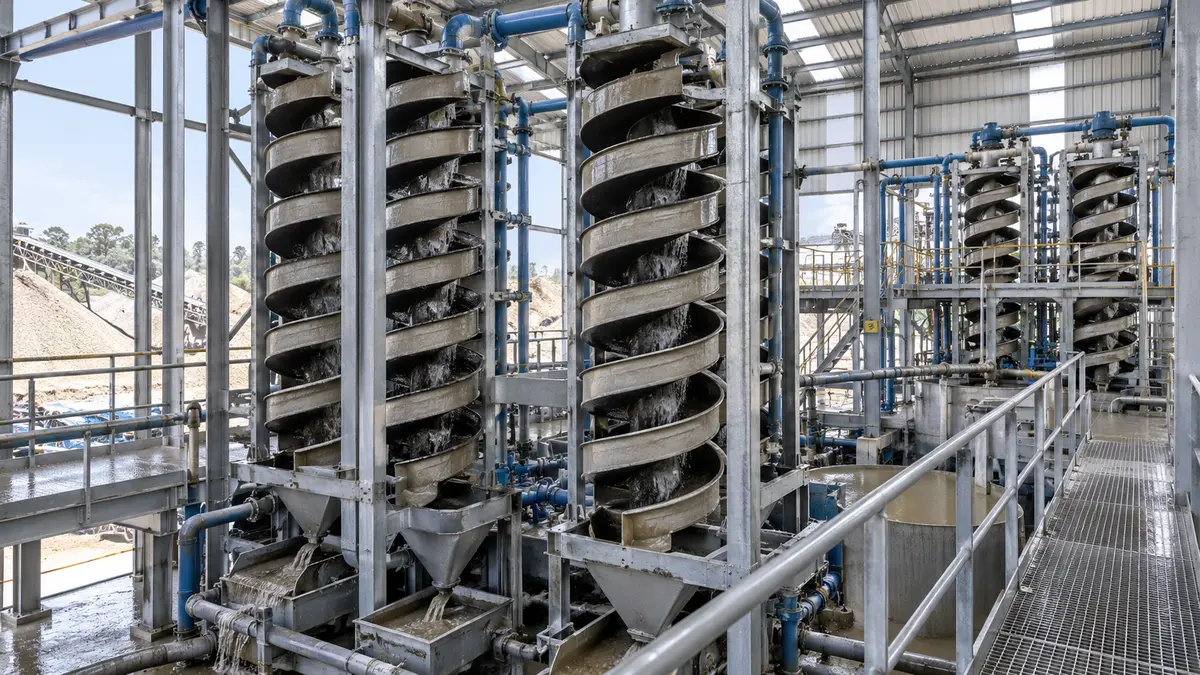
The factory installed domestically manufactured spiral separators during its subsequent equipment programme. By 1 August 2023, equipment from Irkutsk-based NPK Spirit had replaced imported separators in the processing circuit. Ilmenite's specialists sought higher concentrate recovery, reduced dependence on imported machinery and Russian technical solutions suitable for the planned second factory stage.
Plant employees worked with the supplier's specialists to install the additional equipment. They selected a separator type for the existing production conditions, determined its installation points within the circuit, commissioned the units and adjusted the operating regime for separation of the beneficiation products. During the first month of operation, the company reported a 10% increase in the combined output of ilmenite and rutile-leucoxene concentrates.

Sheptalin said further equipment tuning was continuing and expected additional improvements in production performance. The reported first-month gain covered those two concentrate streams together; it was not an annual output total or a stated increase in zircon-concentrate production.
Technical re-equipment in March 2024
New Russian equipment was formally launched at the plant on 22 March 2024 after technical re-equipment and adjustments to the processing technology. Deputy prime minister and industry minister Denis Manturov, Tomsk governor Vladimir Mazur and Rosatom mining division executive Alexei Shemetov attended the ceremony.

Shemetov described work to improve production efficiency after the enterprise opened, including partial replacement of imported equipment with Russian alternatives. Manturov requested proposals for an effective government-support mechanism for Ilmenite and expressed his expectation that Rosatom and the government would continue cooperating on the project. Mazur promised regional support for the planned expansion.
The event concluded with state and industry awards for plant employees. The existing product range included titanium-bearing and zircon-bearing concentrates, glass-making sands and fractionated sands.

Wet beneficiation, finishing and packing
A government delegation inspected the production chain on 3 October 2024. Deputy prime minister Dmitry Patrushev, natural resources minister Alexander Kozlov, deputy industry minister Mikhail Yurin and governor Vladimir Mazur visited the operation. Shemetov and Sheptalin presented the development strategy and showed the wet-beneficiation workshop, concentrate-finishing area and packing section.
The second production stage was being designed at the time of the visit. Patrushev discussed development and support measures with the company's management and the Rosatom mining division. The plant supplied both metal-bearing concentrates and quartz sands for glass manufacturing.

Its titanium-bearing and zircon-bearing concentrates served as inputs for several downstream products:
- welding electrodes and titanium sponge;
- metallic zirconium, refractories and ceramic products;
- glass containers, float glass and construction materials.
These applications involved subsequent industrial processing by customers. The plant's own mining and beneficiation operations produced concentrates and sands rather than all of those finished products.
Quartz powder adds another saleable product
Ilmenite launched a quartz-powder line in March 2025. Industry minister Anton Alikhanov, governor Mazur and Shemetov took part in the opening, which the company announced on 24 March. The line's design output was approximately 10,000 tonnes a year. Management estimated that it could generate an additional 100 million rubles in annual revenue.
Quartz powder, also known as marshalite, was a new product for the enterprise. Its uses included adhesives, varnishes, paints and dry mixes. Sheptalin linked the line to the use of surplus construction sands produced alongside the principal concentrates. He expected it to supply construction-industry customers in the Siberian and Far Eastern federal districts, create jobs for residents of Tomsk District and increase tax contributions.
During the visit, the officials and Rosatom mining representatives also discussed a construction-materials cluster and potential outlets for the enterprise's products. Shemetov put investment already made in Ilmenite at around 4 billion rubles and said design work on the second stage was continuing.
A cluster links sands to downstream manufacturing
Russia's Industry and Trade Ministry registered Tomsk Region's Nonferrous and Rare Earth Metals industrial cluster in July 2025. Ilmenite became its cluster-forming enterprise. The regional administration envisaged project spending of 6.1 billion rubles over 2025–2031 across the participating companies.
The membership included Sibirsky Titan, a joint venture between Siberian Chemical Combine and businessman Andrei Severilov; Interglass, a glass factory outside Tomsk; the Tomsk precast-concrete producer ZKPD TDSK; and Engra. Their proposed production links covered several outlets for the mineral-sands operation. Ilmenite was expected to supply glass-making quartz sand, Interglass to manufacture glassware, Engra to produce silica filler for tyres and ZKPD TDSK to make walkway slabs. Sibirsky Titan planned a titanium-dioxide plant.
At registration, Sibirsky Titan and Engra had no operating production facilities in Tomsk Region. Sibirsky Titan's construction had been postponed over financing and a subsequent location change; the latest expectation was completion in 2027. Engra had previously considered investing at least 350 million rubles near Ilmenite, where infrastructure existed, but construction had not begun.
Crushing, screening and process adjustments
The factory installed a new crushing-and-screening complex during its first-half 2025 modernisation programme. At a director's meeting announced on 2 August, Sheptalin described the completed installation and anticipated gains in production capacity and product quality. Employees had also improved the process flowsheet and developed operating procedures for electrostatic separation.
Further measures remained planned. Sheptalin proposed replacing the installed trommel with a two-part unit and commissioning backup pump and slurry-pipeline lines in September 2025. The August programme identified those as forthcoming measures rather than completed works.
Chief geologist Nikolai Akhmadshchin received the title Honoured Geologist of the Russian Federation under the presidential awards decree of 23 April 2025. In May, Rosatom general inspector Sergei Adamchik visited the beneficiation factory. He gave a favourable assessment of its equipment and adherence to occupational-safety requirements following his tour.
During the meeting, employees raised questions about future development, working conditions and social support. Youth council leader Yelizaveta Lapina presented the council's activities for the first half of the year.
Concentrate quality and workplace safety
At the next director's meeting, held on 2 February 2026, deputy general director for operating efficiency Maxim Kuklov reported improved zircon-concentrate quality during 2025. The company said the improvement had broadened its supply geography and opened new sales markets, without specifying additional shipment volumes in that announcement.
Occupational-safety head Andrei Grokhotov identified maintaining the existing safety performance as a priority for 2026. Ilmenite reported no accidents or occupational injuries in 2025. Preventive measures had included regular short safety briefings, practical training for work at height and purchases of modern personal protective equipment.
More than 20 employee questions had been submitted before the meeting. They concerned voluntary medical insurance in 2026, a broader benefits package and improvements to workplaces. Twenty-four employees received acknowledgements or certificates connected with the nuclear industry's eightieth anniversary. Electric and gas welder Georgy Leonov received a Rosatom medal after placing second in the division's Repair Worker category of the 2025 Person of the Year recognition programme.
The 2025 financial position
Ilmenite recorded a net loss of 3.1 billion rubles under Russian accounting standards for 2025, approximately 3.8 times the previous year's loss. Revenue fell 13.3% to 680.3 million rubles, entirely from finished-product sales. These annual financial results preceded Sheptalin's March 2026 expansion presentation.
Russian customers accounted for 99% of the company's concentrate-supply contracts in 2025, with Belarus accounting for the remaining 1%. The figures described the distribution of contracts, rather than the percentage of tonnes shipped or revenue earned in either market.
The company was examining changes to its beneficiation approach, an increase in annual ore-sands processing to 1.7 million tonnes, lower operating expenditure and a different cost structure. Those measures formed part of its work to improve operating efficiency. They were proposed changes to processing and costs, not achieved financial recovery. Development of the Kuskovsko-Shiryaevsky site also remained dependent on the planned new factories, infrastructure facilities and transport-and-logistics terminal.
Physical separation and environmental controls
The factory prepares ore sands through crushing, disintegration, screening and desliming, then uses gravity, magnetic and electrostatic separation. Its beneficiation technology does not require chemical reagents. Wastewater treatment, however, includes reagent dosing and disinfection. The operating calendar provides for 340 working days and 25 maintenance days, with two twelve-hour shifts.
In 2024, the company recorded 87.520 tonnes of waste. The much lower total than in earlier years reflected the exclusion of reusable overburden from waste accounting after September 2023. It was not a comparable physical reduction in all material handled. The company reported compliance with its permitted discharges, but ambient surface-water tables recorded exceedances upstream and downstream. It attributed Pond No. 11's condition to upstream municipal sewage and several river exceedances to background conditions.
Titanium-industry discussions
Sheptalin attended the twenty-second international Ti-2025 in the CIS conference, organised by the Interstate Association Titan. The company announced its participation on 4 June 2025. Discussions covered ilmenite mining and processing, beneficiation technologies and cooperation with Chinese partners, including potential joint projects.
Sheptalin saw room for growth in supplying raw materials to Russian titanium manufacturers and linked that view to demand for titanium products. The event provided an industry forum for discussing processing and market development; the announcement did not identify a signed joint venture or a new export contract.



















Leave a comment