
Customer pickups and the first-quarter sales gap
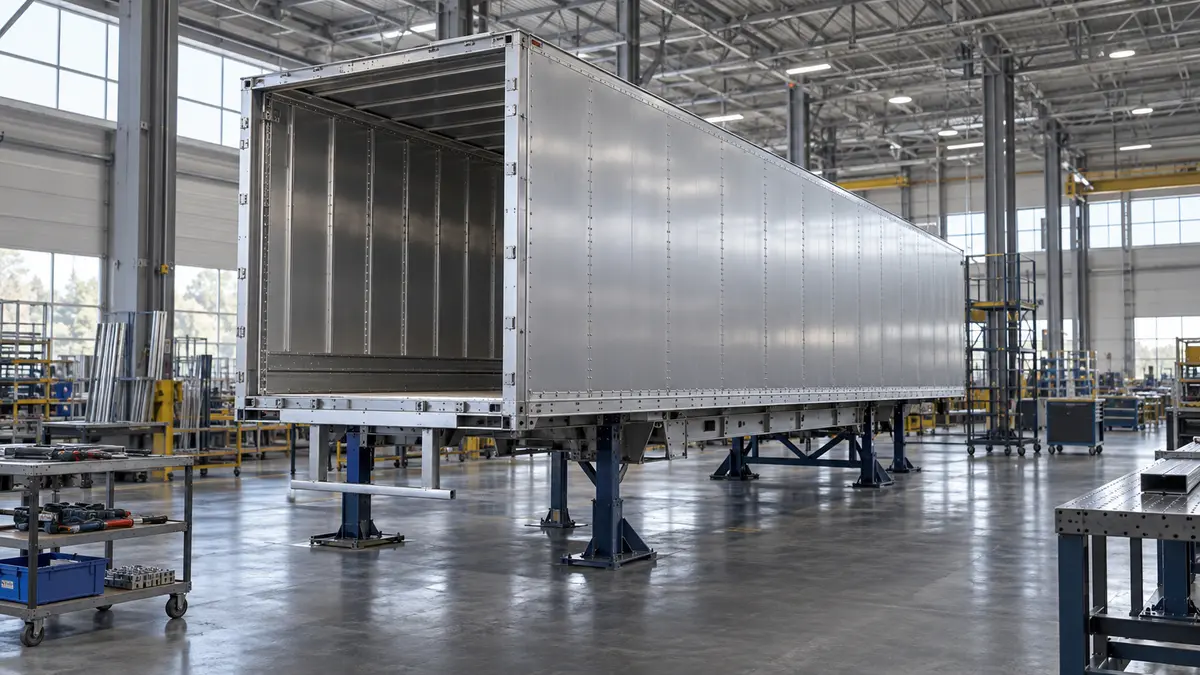
Wabash's customers collected finished equipment more slowly than expected during the first quarter of 2024. The Lafayette, Indiana, manufacturer in the United States generated $515.3 million in quarterly net sales, down 17% from a year earlier. President and chief executive Brent Yeagy placed most of the pickup shortfall in January and early to mid-February, followed by stronger collections near the quarter's end.
Yeagy expected delayed collections to move into subsequent quarters, particularly the second. He described variable pickup rates as customary during slower trailer-market years. FTR's market figures also showed weaker ordering: net trailer orders fell 46% year over year in January, 23% in February and 18% in March. Those industry order changes covered different transactions from Wabash's completed equipment awaiting customer collection. The company's recovery expectation was a forecast made in April 2024.
The Lafayette South Plant conversion
Wabash held the opening ceremony for its advanced dry-van trailer facility in Lafayette on August 25, 2023. More than 150 dealers, customers, suppliers, officials and community representatives attended. The South Plant had changed from refrigerated-trailer capacity to dry-van production. Wabash identified the conversion as its largest investment in a single operation during its 38-year history.
Production had begun several months before the ceremony. The expansion, first announced in July 2021, added design capacity for 10,000 dry vans annually. Wabash expected full ramp-up to double South Plant production with the existing footprint and workforce, with the additional capacity's full effect expected in 2024. Yeagy credited more than 100 employees who had worked on the project over two years. Those figures described the investment and its intended production capability.

The business position at the end of 2023
Wabash finished 2023 with approximately $2.5 billion in annual revenue, $311.9 million in operating income and a 12.3% operating margin. Annual net income attributable to common shareholders was $231.3 million, or $4.81 per diluted share. The company reached annual records for sales, operating income and earnings per share. In the fourth quarter alone, sales were $596 million and operating income was $61.1 million, representing a 10.3% margin. The quarter benefited from research-and-development tax credits.
At December 31, 2023, the order backlog was approximately $1.9 billion. Around $1.6 billion was expected to ship within the next 12 months, up $100 million from the previous quarter. Fourth-quarter shipments included 10,075 new trailers, 4,075 new truck bodies and 35 used trailers. Wabash's February 1, 2024 outlook set annual revenue at $2.2 billion–$2.4 billion and diluted earnings per share at $2.00–$2.50. Yeagy expected lower performance than in 2023 while continuing the company's strategic investment programme.

Second-quarter 2024 shipments and backlog
For the quarter ending June 30, 2024, Wabash generated $550.6 million in sales, down 19.8% year over year. Gross profit was $89.7 million, or 16.3% of sales; operating income was $43.8 million, with a 7.9% margin. Shipments comprised 9,245 trailers and 3,925 truck bodies. The backlog had fallen 28% from March to approximately $1.3 billion as new orders slowed. Approximately $1 billion was expected to ship within the following 12 months.
Transportation Solutions contributed $498.7 million in segment sales and $56.9 million in operating income, a margin of 11.4%. Parts & Services generated $54.9 million in sales and $12.1 million in operating income, or 22%. The July 24 outlook reduced expected 2024 revenue to $2 billion–$2.2 billion and earnings per share to $1.50–$1.60. Yeagy attributed the revision to greater information about customers' capital-spending plans and a weaker first-half demand environment.

The third-quarter legal charge and operations
Third-quarter 2024 sales were $464 million, 26.7% below the year-earlier period. Gross profit was $56 million, equivalent to 12.1% of sales. Wabash recognised a $450 million non-cash charge connected with a legal verdict and recorded an operating loss of $433 million under generally accepted accounting principles, or GAAP. Its adjusted operating income, a non-GAAP measure, was $17 million, with a 3.7% margin. Diluted earnings per share were negative $7.53 under GAAP and positive $0.19 on the adjusted basis.
The September 30 backlog was approximately $1 billion, down 22% from June. Quarterly shipments included 7,585 trailers and 3,630 truck bodies. The October 24 outlook reduced annual revenue to approximately $1.95 billion and adjusted earnings per share to around $1.25. Yeagy disputed the legal outcome and described the company as evaluating its legal options.

Full-year 2024 results and the initial 2025 outlook
Wabash's fourth-quarter 2024 revenue was $416.8 million, with operating income of $3.6 million and an operating margin of 0.9%. Net loss attributable to common shareholders was $1 million, or $0.02 per diluted share. Quarterly shipments comprised 6,770 new trailers, 3,010 new truck bodies and 35 used trailers. The year-end backlog increased from September to approximately $1.2 billion. Its portion expected to ship within the next 12 months was $813 million, more than $100 million above the preceding quarter.
Across 2024, revenue reached $1.95 billion. The company recorded a GAAP operating loss of $356.1 million and adjusted operating income of $94 million, or 4.8% of sales. GAAP net loss was $284.1 million; adjusted net income was $54.7 million. On January 29, 2025, Wabash issued an initial annual revenue forecast of $1.9 billion–$2.1 billion and diluted earnings per share of $0.85–$1.05. Yeagy expected customer orders to be more evenly distributed through the year than usual seasonal patterns.
First-quarter 2025 demand and labour adjustments
Sales fell to $380.9 million in the first quarter of 2025, down 26.1% year over year. Gross profit was $19 million, or 5% of sales. Wabash recorded $314.6 million in GAAP operating profit after recognising a $342 million gain connected with a reduction of the legal verdict. Adjusted operating loss was $27.4 million, with a negative 7.2% margin. Shipments totalled 6,290 trailers and 3,000 truck bodies during the quarter.
The March 31 backlog was approximately $1.2 billion, 5% above year-end but 32% below March 2024. Yeagy described weaker demand, reduced direct labour and customer spending delays associated with tariff uncertainty. The April 30 forecast lowered annual revenue to approximately $1.8 billion and adjusted earnings per share to a loss of $0.35–$0.85. The company expected demand to fall below equipment-replacement levels in 2025, with potential catch-up purchases in later years; that remained management's outlook.

The second-quarter 2025 cost and service picture
Second-quarter 2025 revenue reached $458.8 million, 16.7% below the same quarter in 2024. Gross profit was $41.4 million, or 9% of sales. GAAP operating loss was $4.8 million, including a $5 million loss related to an appeal bond and contingent interest expense associated with the legal verdict. Adjusted operating loss was $0.1 million. The June 30 backlog stood at approximately $1 billion as customers continued delaying capital-spending decisions.
Transportation Solutions produced $400.2 million in segment sales and $12.5 million in operating income, a 3.1% margin. Parts & Services generated $59.7 million in sales and $9.1 million in operating income, or 15.2%. Wabash's July 25 outlook lowered annual revenue to approximately $1.6 billion and adjusted earnings per share to a loss of $1.00–$1.30. Its 2026 order book was not yet open, although the company was discussing demand and preparing quotations with customers.

Third-quarter 2025 truck-body demand
Third-quarter sales were $381.6 million, down 17.8% year over year. Wabash generated $16 million in gross profit, representing 4.1% of sales. GAAP operating income of $58 million included an $81 million gain arising from the settlement agreement related to the legal verdict. Adjusted operating loss was $23.6 million. Diluted earnings per share were $0.97 under GAAP, compared with an adjusted loss of $0.51. The September 30 backlog was approximately $829 million.
Transportation Solutions recorded $334.5 million in segment sales, compared with $415.5 million a year earlier. Parts & Services sales were approximately $61 million, against $52.3 million in the comparable period. Yeagy identified softer medium-duty chassis production and weaker freight, construction and industrial end markets as challenges for truck bodies. On October 30, Wabash reduced its annual revenue outlook to $1.5 billion and adjusted earnings-per-share forecast to a loss of $1.95–$2.05. Management remained cautiously optimistic about gradual recovery during 2026.

The 2025 year-end manufacturing adjustment
Wabash's fourth-quarter 2025 sales were $321.5 million. Operating loss was $59.9 million, equivalent to 18.6% of sales. The adjusted operating loss was $43.8 million, or 13.6%; adjusted measures excluded costs associated with idling two manufacturing facilities. Net loss attributable to common shareholders was $49.9 million, or $1.23 per diluted share, while the adjusted net loss was $37.8 million, or $0.93 per share. The year-end backlog stood at approximately $705 million as capital-spending decisions remained delayed.
Full-year 2025 revenue reached $1.54 billion. GAAP operating income was $307.5 million, compared with an adjusted operating loss of $95 million, or 6.2% of sales. GAAP net income was $211.5 million; adjusted net loss was $89.9 million. On February 4, 2026, Wabash provided guidance only for the first quarter, citing limited visibility into recovery timing and durability. It expected revenue of $310 million–$330 million and adjusted earnings per share showing a loss of $0.95–$1.05. It issued no full-year forecast at that point.
First-quarter 2026 orders and reported losses
Wabash's first-quarter 2026 sales were $303.2 million, a 20.4% year-over-year decrease. The company recorded a consolidated gross loss of approximately $11 million and a negative gross margin of 3.5%. GAAP operating loss was $52 million, including a $6 million purchase-accounting gain and $2.8 million in facility-idling costs. Adjusted operating loss was $55.5 million. Quarterly diluted earnings per share showed a loss of $1.11 under GAAP and $1.17 on the adjusted basis.
At March 31, the backlog had increased by $132 million from December to approximately $837 million. The company shipped 5,378 trailers and 1,527 truck bodies. Transportation Solutions generated approximately $250.2 million in segment sales, while Parts & Services generated approximately $54.1 million. In its May 1 announcement, Wabash forecast second-quarter revenue of $380 million–$400 million and an adjusted per-share loss of $0.40–$0.60. Yeagy described improving visibility among customers while retaining uncertainty about freight-market recovery and purchasing decisions.
Second-quarter 2026 shipments and revised comparisons
Second-quarter 2026 revenue was $417.2 million, down 9.1% from the comparable period. Gross profit was approximately $15 million, with a 3.7% margin. GAAP operating loss of $25 million included $1.8 million in facility-idling costs; adjusted operating loss was $23.5 million. The June 30 backlog reached approximately $956 million, an increase of $119 million from March. Transportation Solutions generated $354.7 million in segment sales and an operating loss of $13.9 million; Parts & Services generated $63.4 million in sales and $6 million in operating income.
The July 29 announcement presented 8,292 trailer shipments against a recast 2025 comparison of 8,043, excluding converter dollies in both periods. Truck-body shipments were 1,380, against 3,188 in its comparative table. These comparisons retain the definitions used in that announcement. The third-quarter forecast set revenue at $440 million–$460 million and adjusted earnings per share at a loss of $0.40–$0.50. Yeagy expected improving carrier economics to support replacement spending, an expectation accompanying the quarterly figures.
Trailer access through Pools and Plus
Wabash introduced two Trailers as a Service programmes on October 9, 2025. TaaS Pools offers shippers a nationwide trailer pool that is independent of a particular service provider. Wabash FleetCare supplies maintenance and compliance support for that equipment. TaaS Plus targets third-party logistics companies and brokers seeking access to assets through service arrangements. Its three tiers span trailer-capacity access through broader programmes containing compliance, maintenance and operational support.
TrailerHawk.ai supplies technology supporting replenishment, staging, repositioning and utilisation across those offerings. Wabash had acquired the business earlier in 2025 and was incorporating its visibility and analytics into the service portfolio. Chief growth officer Mike Pettit described the programmes as flexible trailer solutions for shippers, carriers and logistics providers. Managing director Brett Suma identified cost, assurance and flexibility as customer procurement priorities. Their statements set out the programmes' intended benefits; the announcement provided service descriptions rather than measured changes in fleet performance or customer spending.
Configuration and aftermarket software ventures
Wabash and UP.Labs announced a venture partnership on April 22, 2025, following work initiated in autumn 2024. The partners were developing Wabash Venture Lab and two software startups. The first targeted made-to-order trailer and truck-body configuration, using trade-off visualisations to guide specification and quotation work. Wabash expected that work to support production scheduling, supply planning and parts manufacturing. Its planned software connections covered:
- Configure-price-quote systems for specifications and quotations;
- Enterprise resource planning systems;
- Customer relationship management systems.
The second venture focused on aftermarket parts, with predictive analytics intended to coordinate production, distribution and pricing. Its proposed customers included manufacturers with growing parts and service networks, such as engineered-equipment makers and specialty-vehicle producers. Pettit described working with venture builders to develop tools tailored to Wabash's business; UP.Labs chief executive John Kuolt described applying the venture-lab model to industrial manufacturing. Initial minimum viable product capabilities were expected later in 2025. The announcement identified development work and potential future integration into Wabash's operations.



















Leave a comment